How Water Softeners Affect Anode Rods in Peoria
A water softener trades calcium and magnesium for sodium through ion exchange, which slows scale on fixtures a...
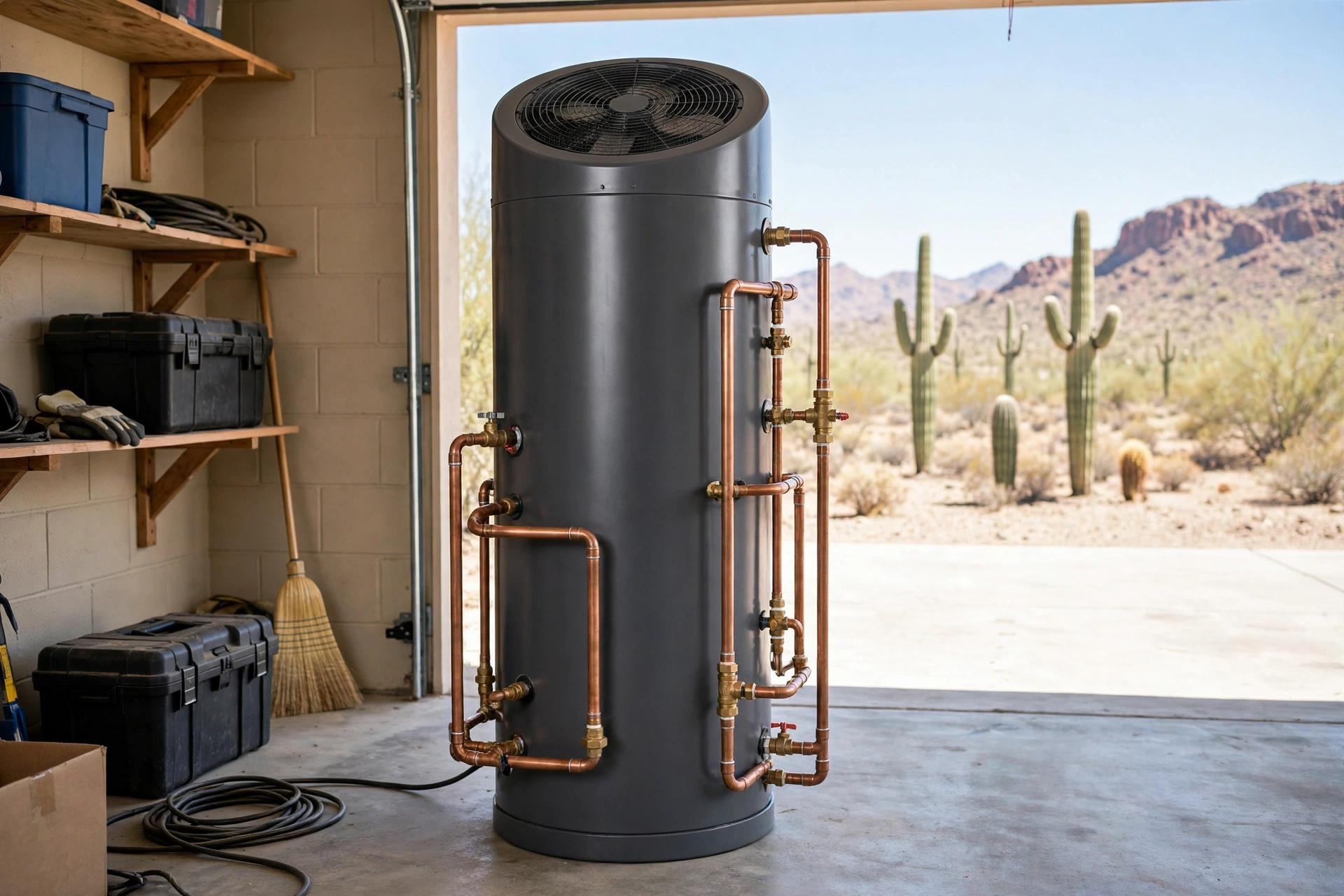
Learn morePeoria garages run hot for much of the year. Homes near Loop 101, Bell Road, and Arrowhead Towne Center bake through long summers, with garage air climbing past 110 degrees on the hottest afternoons. Most water heaters simply endure that heat. A heat pump water heater uses it. The design, often known as a hybrid unit, treats warm garage air as fuel, pulling heat from the air and pushing it into stored water. That simple shift changes how the unit behaves in Glendale and Peoria garages, in helpful ways and in ways that need planning.
Heat pump units suit many Arizona garages, yet they ask for different planning than a standard electric tank. Air volume, condensate drainage, cool exhaust air, and recovery patterns all shape whether a given garage fits the design. This post explains the mechanics in plain terms and walks through water heater installation considerations for Peoria and West Valley garages, from warm air advantages to upkeep habits in dusty spaces.
A heat pump water heater works like a refrigerator in reverse. Refrigerant absorbs warmth from garage air, a compressor concentrates that warmth, and a heat exchanger passes it into tank water. Because the unit moves existing heat rather than creating new heat from scratch, it delivers more heat energy than the electricity it consumes. Standard electric resistance units, by contrast, turn each unit of electricity into a matching unit of heat through elements alone.
Most units sold today pair the heat pump with backup electric resistance elements, which is why many owners hear the term hybrid. The elements engage when demand spikes, when garage air cools, or when the household needs faster recovery than the heat pump alone provides. In typical use, the heat pump handles most heating, with elements stepping in as needed. That pairing gives owners efficiency most of the time and extra heating muscle during busy spells.
Describe the symptoms and request service anywhere in Peoria and the West Valley.
Warm intake air feeds a heat pump. As garage air warms, the unit finds heat more easily, transfers it faster, and runs with less strain for each gallon heated. Peoria garages spend much of the year in warm territory, which means the unit works in favorable conditions through spring, summer, and fall. Cooler winter mornings still allow heat pump operation, though the unit works harder as intake air cools and leans more on backup elements.
Extreme heat still deserves a check. Most units list an upper operating range for heat pump mode, and a poorly ventilated west facing garage can climb past outdoor readings during a heat wave. A unit sitting near its upper limit may switch to backup elements or pause heat pump operation until air cools. A contractor working in Youngtown and Peoria garages can confirm the operating range for the model under review and weigh garage ventilation, shading, and airflow before settling on a spot.
Tell us what your unit is doing and request service.
A heat pump needs air to draw from, so cramped closets starve it. Units often need around 700 cubic feet of surrounding air volume, or a ducted path to outside air, to work without strain. A typical two car garage usually offers that volume easily, while a small closet or a garage packed wall to wall with storage may not. Clear space around the unit, with room for air to circulate, matters as much as floor space for the tank itself.
Condensate and exhaust air complete the picture. As the unit pulls warmth from humid air, moisture condenses and needs a drain path, usually to a floor drain or a condensate line routed to a suitable discharge point. The unit also exhausts cool, dry air back into the garage, which feels welcome in a hot Peoria summer and slightly chilly in a cool garage used as a workshop. Ducting options can direct that exhaust air where it helps most, depending on the garage layout.
Request service and get a straight answer about your unit.
Recovery time with a heat pump follows air temperature and tank size closely. Warm garage air speeds heat transfer, while cool air slows it and invites more backup element use. A larger tank holds more heated water for busy mornings, giving the heat pump more time to recover between draws. Households with steady, spread out use often notice little difference from a standard tank, while households with back to back showers may notice a slower rebound after the third or fourth draw.
Thermostat settings and usage timing shape the experience as well. A thermostat set at 120 degrees suits most households, and spreading laundry and dishwasher runs away from the morning shower block eases peak pressure on any tank. Owners moving from a standard electric tank should expect a learning curve in the first weeks, as they learn how the new unit responds to guests, laundry days, and cool mornings. Notes on electric water heater repair help owners compare upkeep between resistance tanks and hybrid designs.
Do not wait for a small fault to flood the garage. Request service now.
Desert dust asks for steady filter attention. Heat pump units draw garage air through a filter or intake screen, and dust, lint, and garage debris clog that path over time. A clogged filter starves airflow, forces longer run times, and dulls efficiency. Checking and cleaning the filter on the schedule in the unit instructions keeps air moving well. The tank side still needs familiar care, including flushing for sediment and anode rod checks in hard water.
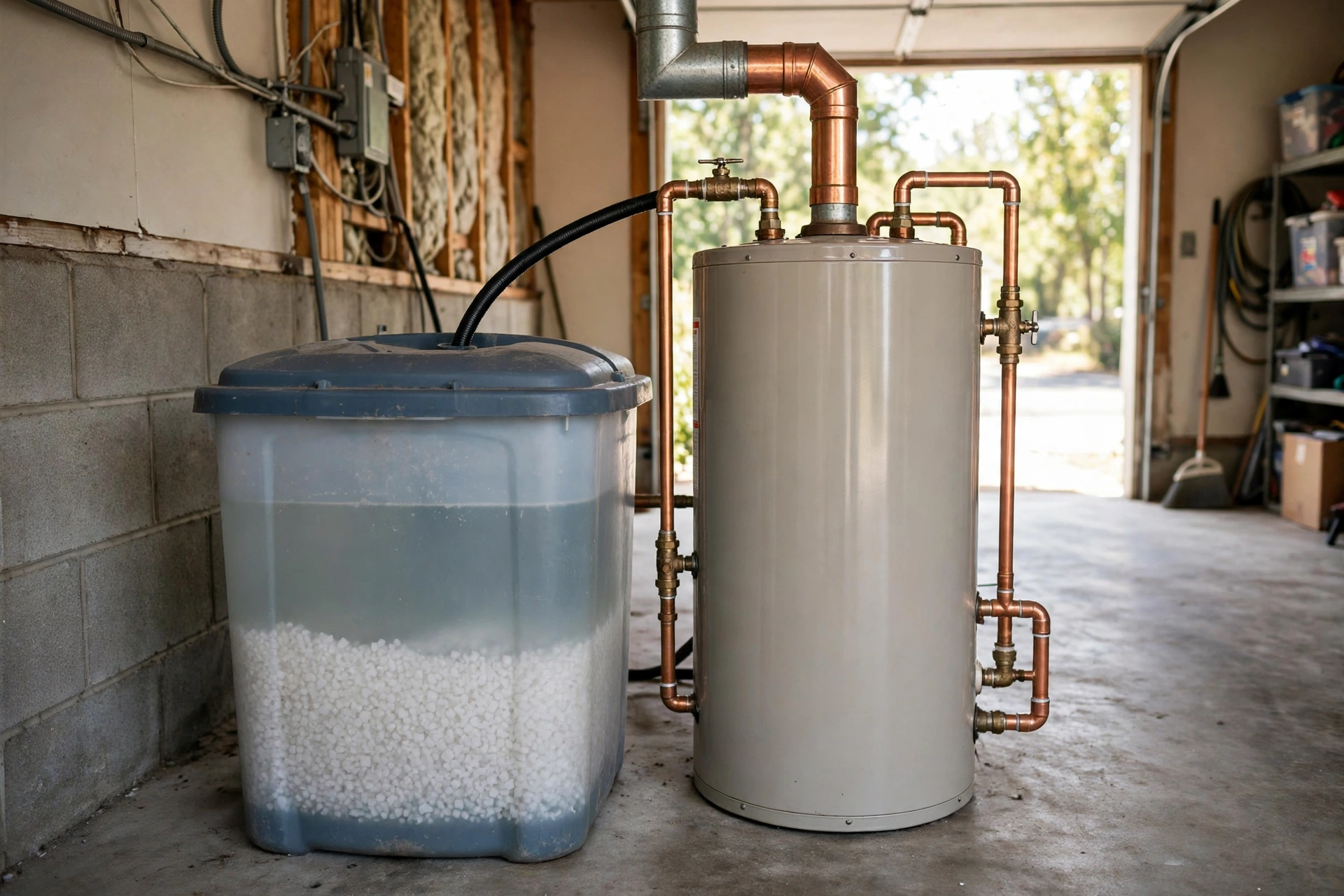
Hard water ties heat pump care to the same sediment story as any tank. Minerals settle, rods wear, and flushing clears loose deposits before they harden. Households with a softener should watch rod wear closely, since softened water changes rod behavior. The post on how water softeners affect anode rods in Peoria explains that interaction in detail. Steady water heater maintenance that covers filters, rods, flushing, and condensate drainage keeps a hybrid unit working as designed through desert summers.
Request service and talk through sizing, fuel type, and placement.
Read the guide, then describe your water heater problem and we will help arrange the next step.
It pulls warmth from garage air, concentrates that warmth through refrigerant and a compressor, and passes it into tank water through a heat exchanger. Backup electric elements engage during high demand or cooler air. Because the unit moves heat rather than creating it, warm garage air improves how efficiently it heats water.
It exhausts cool, dry air as a byproduct of pulling warmth from the surrounding air. In a hot Peoria garage, that cooling feels welcome through summer. In a cooler garage used as a workshop, the effect may feel chilly, and ducting can direct exhaust air where it helps most.
Yes, for condensate. Moisture from garage air condenses during heat pump operation and needs a drain path, usually to a floor drain or a condensate line. The drain route should be confirmed during planning, along with air volume and clearance, so condensate never pools near the tank base.
Recovery depends on garage air temperature, tank size, and backup element use. Warm air speeds heat transfer, while cool air slows it and leans more on elements. Households with spread out use often notice little difference, while back to back showers may reveal a slower rebound than a resistance tank.
Answers on warm air advantages, drainage, air volume, and recovery in desert garages.
Request ServiceA water softener trades calcium and magnesium for sodium through ion exchange, which slows scale on fixtures a...
Learn more
Water heaters in Sun City and Sun City West face a mix of older ranch floor plans, hard Valley water, and long...
Learn more
A recirculation pump keeps hot water moving through a loop so it waits near the tap instead of cooling in a lo...
Learn more