Tankless Water Heater Installation and Repair
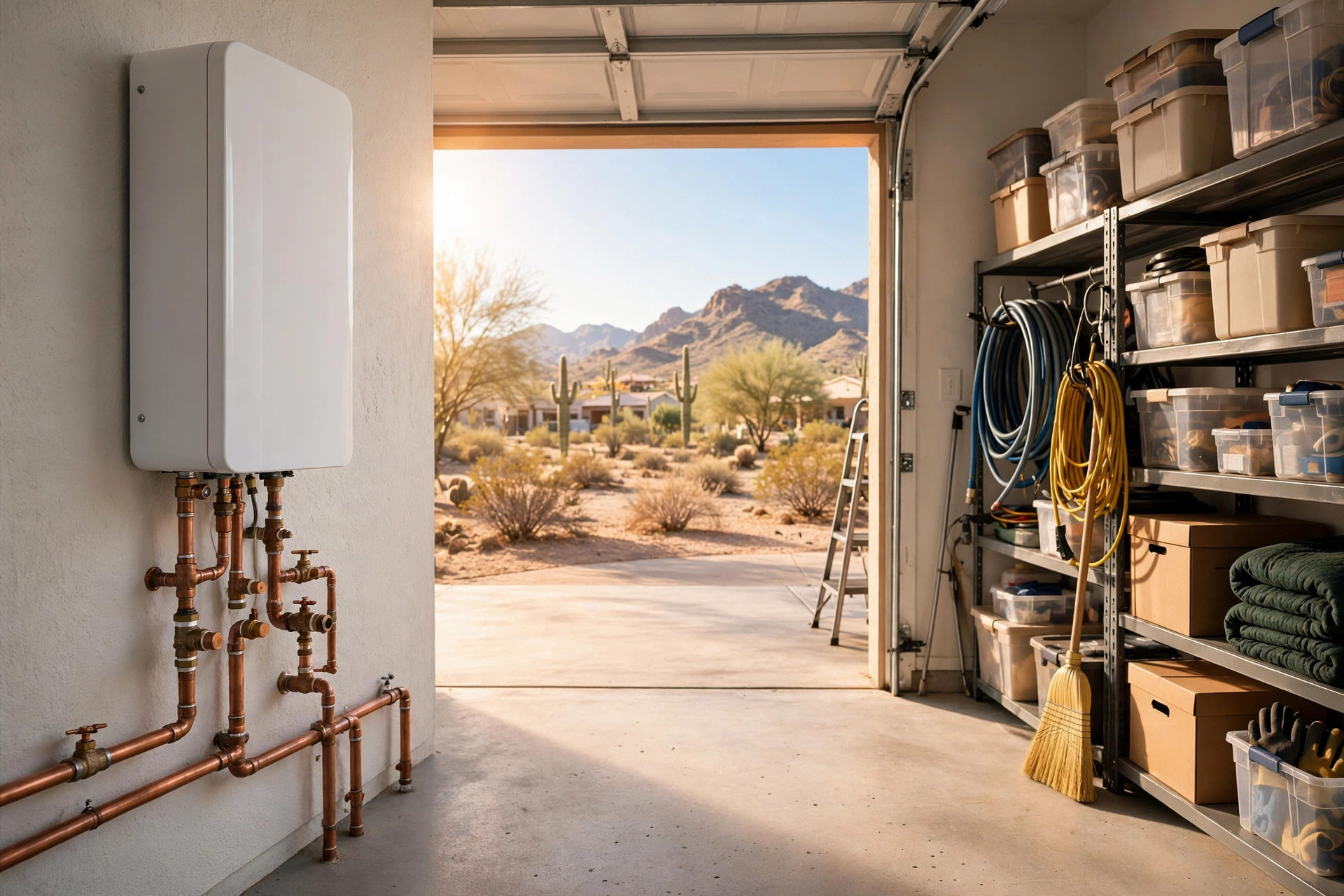
Tankless water heaters heat water only when a tap opens, which suits many Peoria homes where garage space is t...
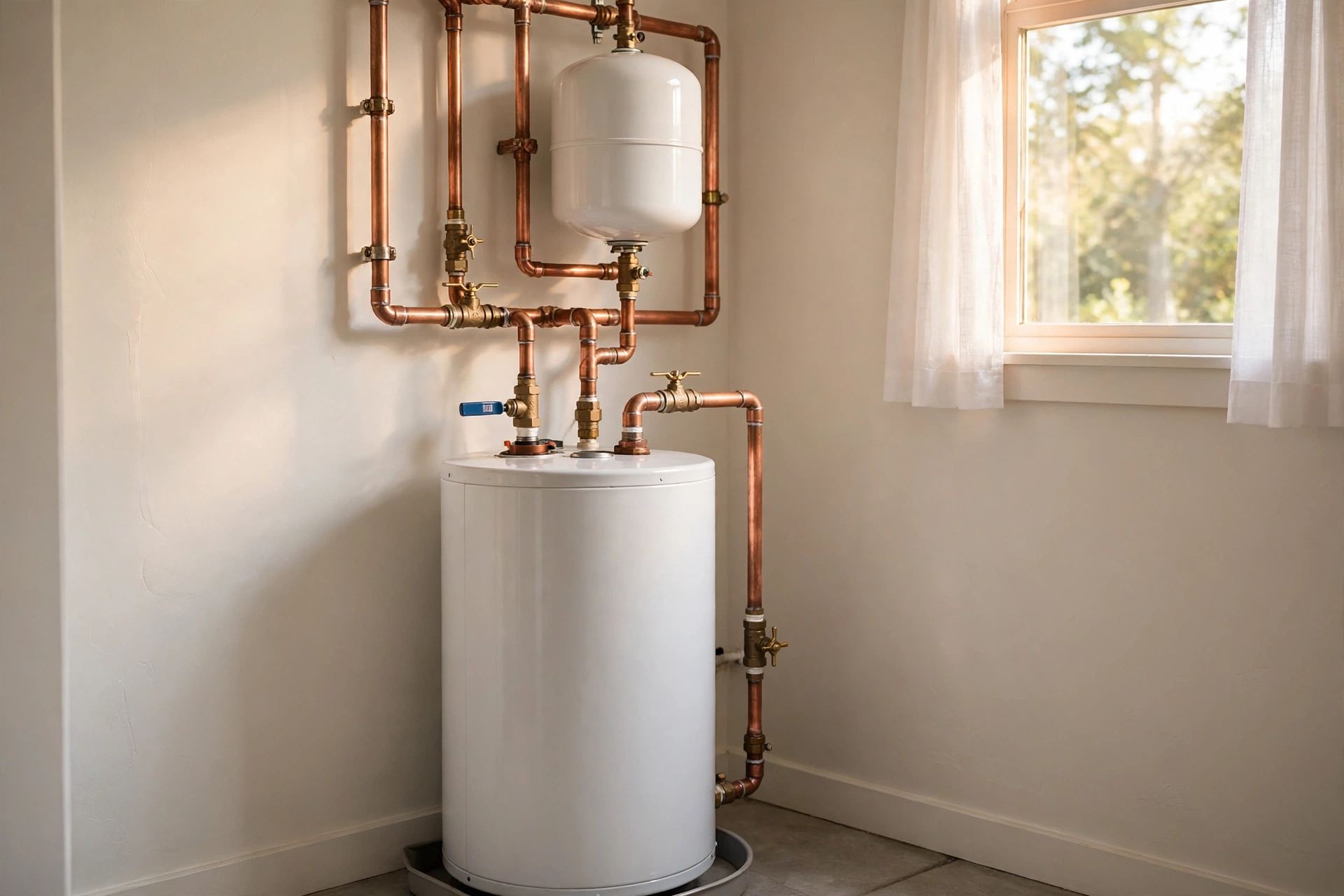
Learn moreMost Peoria homeowners never think about the small tank mounted near their water heater until it fails, and then it becomes the explanation for a whole cluster of confusing symptoms. The expansion tank looks unremarkable: a compact steel cylinder, often tucked against the garage wall above or beside the heater. Inside, a flexible bladder separates water from a cushion of air. When the water heater fires and water expands, the bladder flexes and absorbs the extra volume. When that bladder ruptures or the air cushion escapes, the tank fills with water, loses its cushion, and leaves the plumbing system to absorb every pressure spike on its own. Desert Valley Water Heater Pros connects homeowners with independent contractors in our network who test and replace expansion tanks across Peoria and the West Valley.
Expansion tank trouble hides behind other symptoms, which is why it gets missed. A dripping TPR valve looks like a valve problem. Weeping joints look like fitting problems. Banging pipes look like loose pipe problems. In each case the expansion tank may be the root cause, and replacing the symptom part without addressing the tank only buys a short quiet period before the dripping returns. This page explains how expansion tanks work, how failure shows itself, and what a replacement visit involves, so homeowners can recognize the pattern and request the right help the first time.
Water expands as it heats, and in an open system that extra volume simply pushes back toward the supply. Many modern Peoria homes have closed systems, where a check valve or pressure reducing valve prevents that backward flow. With nowhere to go, expanded water raises system pressure sharply during every heating cycle. The expansion tank provides the missing room: water pushes against the bladder, the air cushion compresses, and pressure stays within a steady range instead of spiking.
That steady range protects everything downstream. The TPR valve stays closed during normal heating, joints and seals avoid repeated pressure hammering, and the tank lining escapes the stress of constant expansion and contraction. Without a working expansion tank, each heating cycle becomes a pressure event, and the weakest joint or valve absorbs it. Contractors in our network check expansion tank function during water heater maintenance visits as well as during leak and valve visits, because the tank quietly guards the whole system.
Describe the symptoms and request service anywhere in Peoria and the West Valley.
A failed expansion tank announces itself through pressure symptoms. The most common is a TPR valve that drips during or just after heating cycles, then stops as the system cools. Another is water weeping at joints that previously held dry, especially at unions and flex connectors near the heater. Banging or knocking sounds as the heater cycles, faucets that spit or surge when first opened, and a tank that feels heavy and waterlogged when tapped all point in the same direction. Each symptom alone could mean something else, but together they describe a system without expansion room.
The tap test gives a quick first clue. A healthy expansion tank sounds hollow at the air end and solid where water sits, while a fully waterlogged tank sounds solid throughout and feels heavy for its size. Contractors confirm with a pressure check at the air valve and an observation of pressure behavior during a heating cycle, rather than relying on the tap test alone. A tank that has lost its air charge may hold a recharge for a time, but a ruptured bladder cannot be restored and needs replacement. The distinction matters, and testing makes it clear.
Tell us what your unit is doing and request service.
Pressure spikes do their damage gradually, cycle after cycle. Each spike pushes against the TPR valve seat, flexes joints, and stresses the tank lining and element seals. Over months, a valve seat that once sealed cleanly begins to weep. A joint that held for years develops a slow drip. The tank lining, already working against Peoria hard water and sediment, absorbs stress it was never meant to handle repeatedly. Homeowners often notice the damage at the weakest point first, while the pressure cause stays invisible.
Garage heat and hard water compound the strain. Summer temperatures past 110 degrees age seals and bladder material, while mineral crust at joints hides slow weeps until staining appears. A contractor who replaces a dripping valve without checking pressure behavior leaves the cause in place, and the new valve soon drips too. That is why expansion tank checks belong in every valve, leak, and leaking water heater visit. Addressing pressure at its source protects the repair and everything around it.
Request service and get a straight answer about your unit.
Expansion tanks come in sizes matched to heater volume and system pressure behavior, and fitting the right size matters. An undersized tank runs out of cushion during a full heating cycle and lets pressure spike anyway. An oversized tank wastes space and may hang awkwardly from piping that was never meant to carry its weight when full. Contractors select size based on the heater type and volume, observed pressure behavior, and the layout of the existing piping, then mount the new tank with proper support so its weight rests on brackets or strapping rather than on joints alone.
Placement follows the piping layout and service access. The tank usually sits on the cold supply side near the heater, oriented so the air valve stays reachable for future checks and the tank can be swapped without dismantling the surrounding plumbing. In tight Peoria garages where water softeners, shelving, and storage crowd the heater wall, placement needs a fresh look rather than a copy of whatever came before. A contractor checks support, orientation, and clearance during the swap and explains where the new tank sits and how future checks will reach it.
Do not wait for a small fault to flood the garage. Request service now.
Tank units and tankless units interact with expansion differently, and the distinction shapes replacement advice. Tank units hold a large heated volume, so expansion during each cycle is substantial and the tank absorbs it directly. Tankless units heat water on demand with little stored volume, so expansion behavior depends on the rest of the system, including any storage, recirculation loops, and closed loop components. A contractor looks at the whole system rather than assuming every home needs the same expansion setup.
Recirculation systems add another layer, since pumps and loops keep hot water moving to distant bathrooms in large West Valley homes. Those systems change pressure behavior during heating and standby, and expansion protection must suit the full configuration. Homeowners with long pipe runs can read the guide to recirculation pumps for large West Valley homes for background, and the page on tankless installation and repair explains how tankless care differs from tank care. The replacement visit ends with a pressure observation during a real heating cycle, confirming the new tank absorbs expansion as intended.
Request service and talk through sizing, fuel type, and placement.
After a swap, verification matters more than speed. The contractor charges the new tank air cushion to match system conditions, restores water flow, and watches pressure behavior through a full heating cycle. The TPR valve should stay dry, joints should hold without weeping, and pressure should rise gently and settle rather than spiking. A follow up check after the system has cycled several times confirms the behavior holds under normal household use, not just under test conditions.
Homeowners in El Mirage, Youngtown, and across Peoria receive the same verification steps, because pressure behavior does not vary by neighborhood. The contractor shows the homeowner the new tank location, the air valve, and the signs that would suggest future trouble, including renewed TPR dripping or joint weeping. Pairing the swap with a maintenance visit keeps the tank, heater, and valves on one care rhythm, and the post on signs of water heater failure in older homes helps homeowners read early warnings across the whole system.
Related: request expansion tank replacement, full heater replacement, gas heater pressure checks
Request service and describe what your water heater is doing.
Describe what your unit is doing and we will help arrange the next step.
An expansion tank absorbs the extra volume created when water heats and expands in a closed plumbing system. A bladder inside the tank flexes against an air cushion, keeping pressure steady instead of spiking during each heating cycle. That protection helps valves, joints, and the tank lining last longer.
Common signs include a TPR valve that drips during heating, weeping joints near the heater, banging pipes, and a tank that feels heavy and sounds solid when tapped. A contractor confirms failure with a pressure check at the air valve and observation during a heating cycle, since symptoms alone can have other causes.
Yes, a failed expansion tank is a frequent cause of TPR valve dripping. Without an air cushion to absorb expansion, pressure spikes during heating and pushes water past the valve. Replacing the valve without addressing the tank often means the dripping returns, so both parts are checked together.
It depends on the full plumbing system, including closed loop components, storage, and recirculation. Tankless units store little water, so expansion behavior differs from tank units. A contractor looks at the whole system and pressure behavior before advising on expansion protection for a tankless setup.
Lifespan varies with water quality, pressure behavior, and garage heat, and the bladder and air charge wear over time. Regular checks during maintenance visits catch a failing tank before pressure symptoms damage valves and joints. A contractor tests the air charge and bladder condition rather than guessing from age alone.
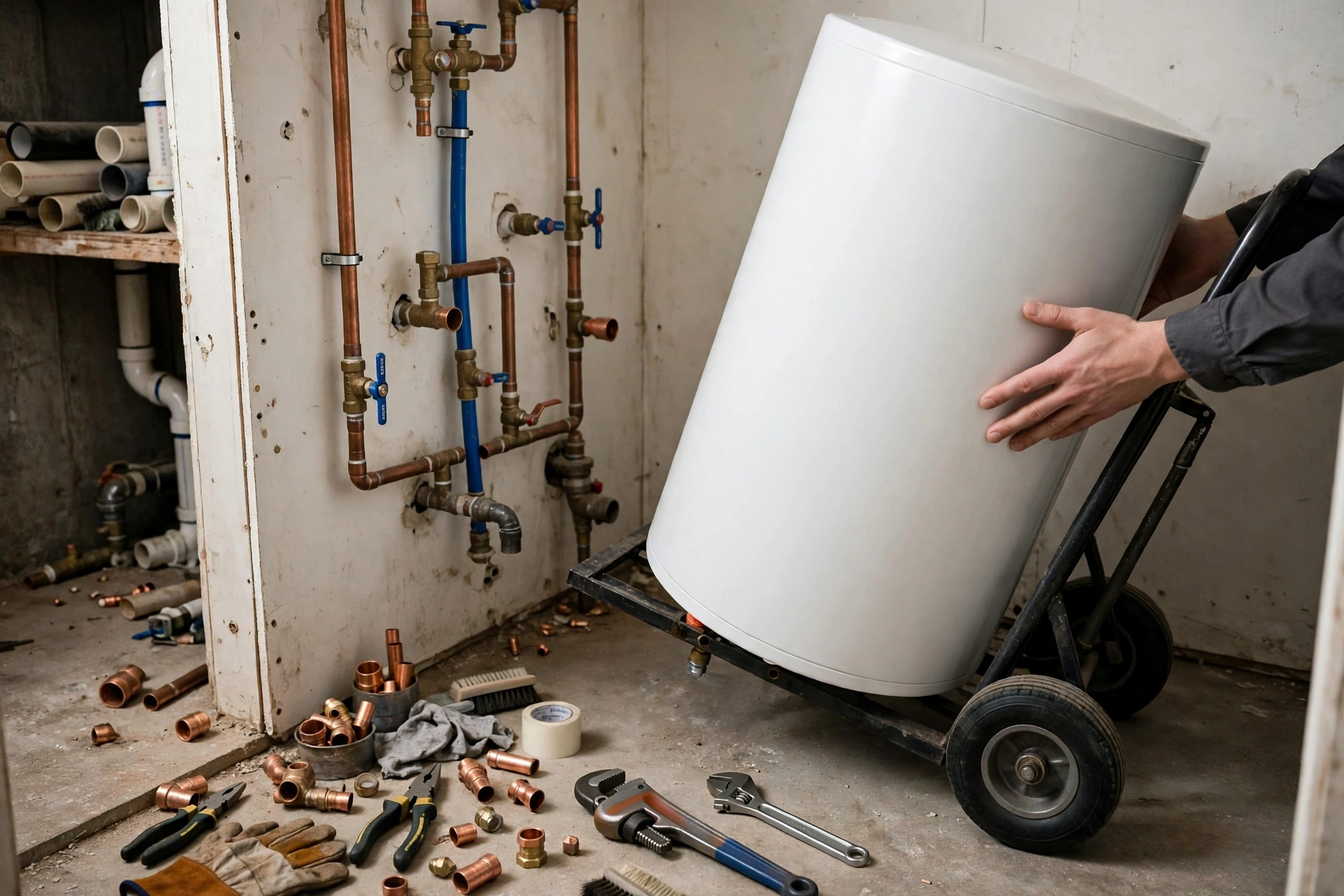
The contractor isolates the tank, drains the affected section, removes the old tank, and fits a correctly sized replacement with proper support. The air cushion is set to match system conditions, water flow is restored, and pressure behavior is observed through a full heating cycle to confirm the new tank absorbs expansion properly.
Not seeing your question? Request service and describe what your unit is doing.
Request ServiceTankless water heaters heat water only when a tap opens, which suits many Peoria homes where garage space is t...
Learn more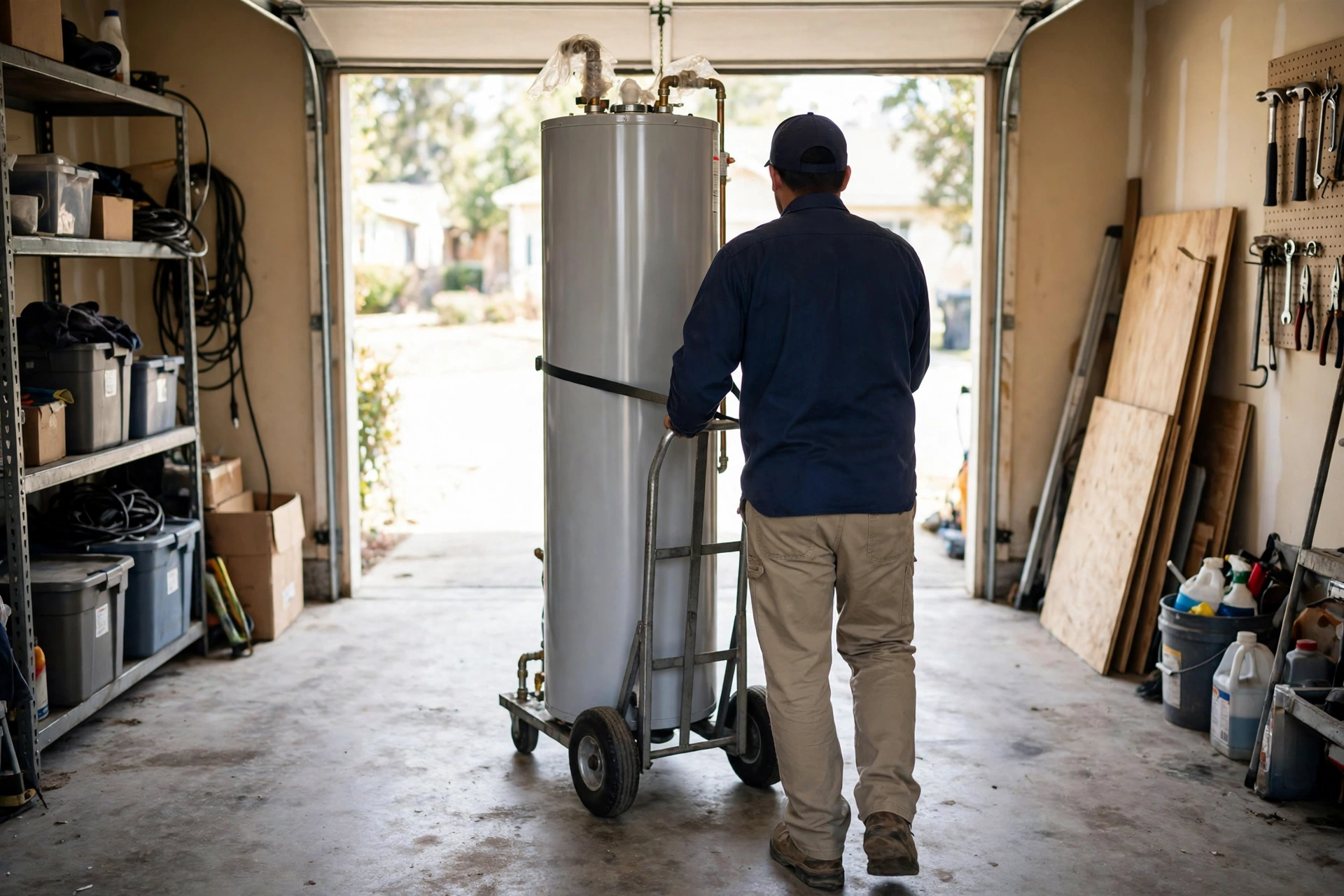
A water heater replacement becomes the right move when a tank leaks, rusts through, or stops heating reliably ...
Learn more
Water heater installation covers new setups in Peoria homes, from new builds in Vistancia to remodels and addi...
Learn more