Surprise Water Heater Repair For New and Established Homes
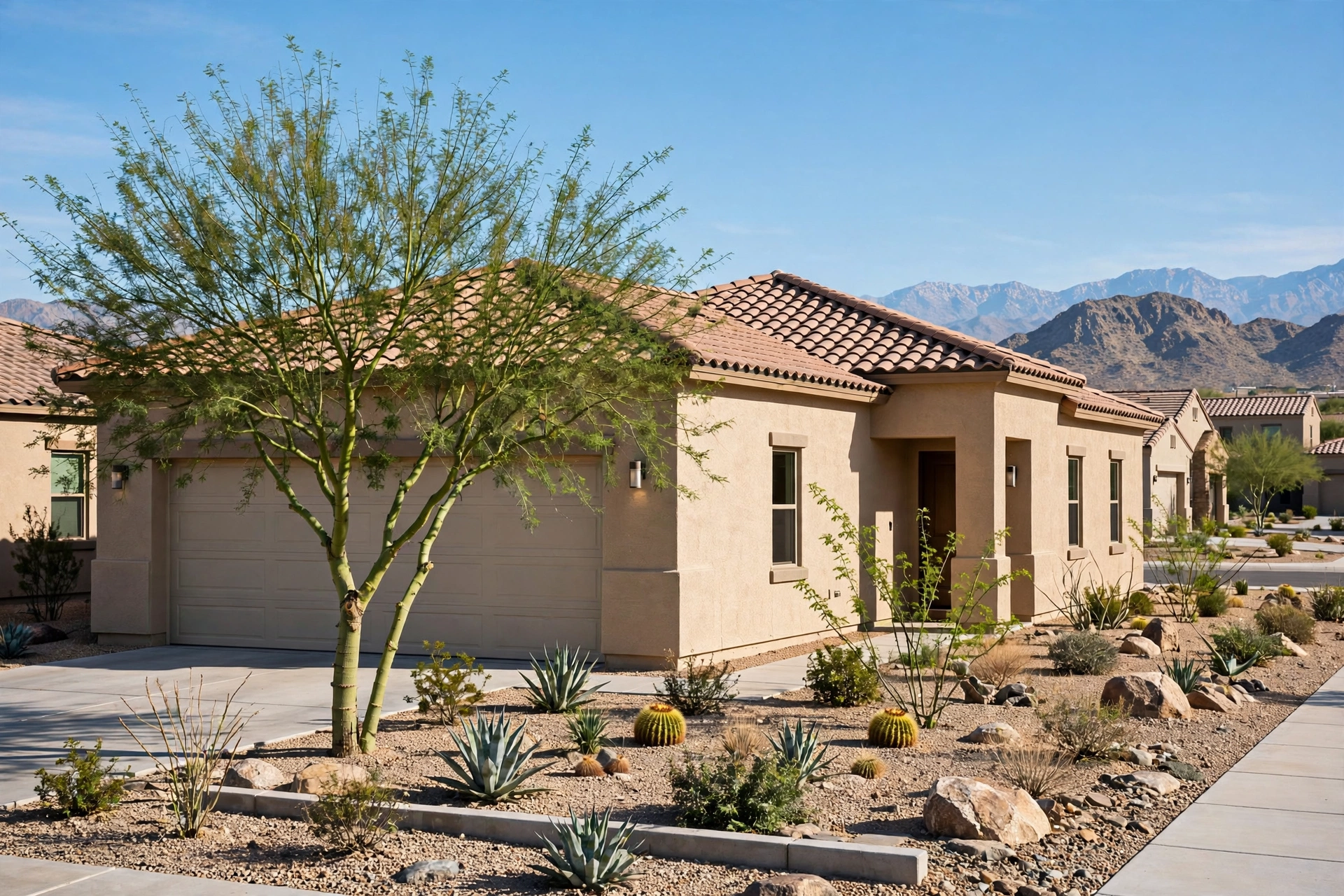
Surprise sits 20 to 30 miles northwest of downtown Phoenix, between Peoria, Sun City, Sun City West, El Mirage, and the White Tank Mountains, and it has grown from a small town into one of the larger cities in Arizona. The original townsite sits around Bell Road and Grand Avenue, while newer growth has pushed north and west toward Loop 303 and the foothills. Most homes in Surprise were built since 2000, which means many heaters are still on their first or second unit, yet hard water and garage heat age those units faster than newcomers often expect. Desert Valley Water Heater Pros connects homeowners in Peoria and the West Valley with independent local plumbing contractors, so a Surprise household can request service and have the heater checked in its own garage, laundry closet, or utility corner.
Serving Surprise, AZ 85374
Daily life in Surprise moves between distinct neighborhoods, and each one uses hot water a little differently. Marley Park families juggle school mornings, sports practices, and laundry loads, while Sun City Grand residents keep steadier routines shaped by golf, clubhouses, pools, and pickleball. The Village at Prasada along Loop 303 has become a retail and dining hub for the newer west side, and Surprise Stadium fills each February and March when the Kansas City Royals and Texas Rangers arrive for spring training. This page follows those patterns street by street, explaining what tends to wear out first, what a local contractor looks for, and how to plan a repair or replacement without rushing.
New Builds Along Loop 303 and First Water Heater Decisions
The Loop 303 corridor anchors the newest part of Surprise, with master planned communities like Asante, Sterling Grove, Rancho Gabriela, and North Copper Canyon rising near the highway and the Prasada commercial district. Homes here often feature open floor plans, larger primary suites, three or four bathrooms, and a garage heater set far from the farthest shower. A first heater in one of these houses may still look new on the outside while scale quietly builds inside, because very hard Valley water begins depositing minerals from the first heating cycle onward. Age alone tells only part of the story when the water itself is doing steady work on the tank.
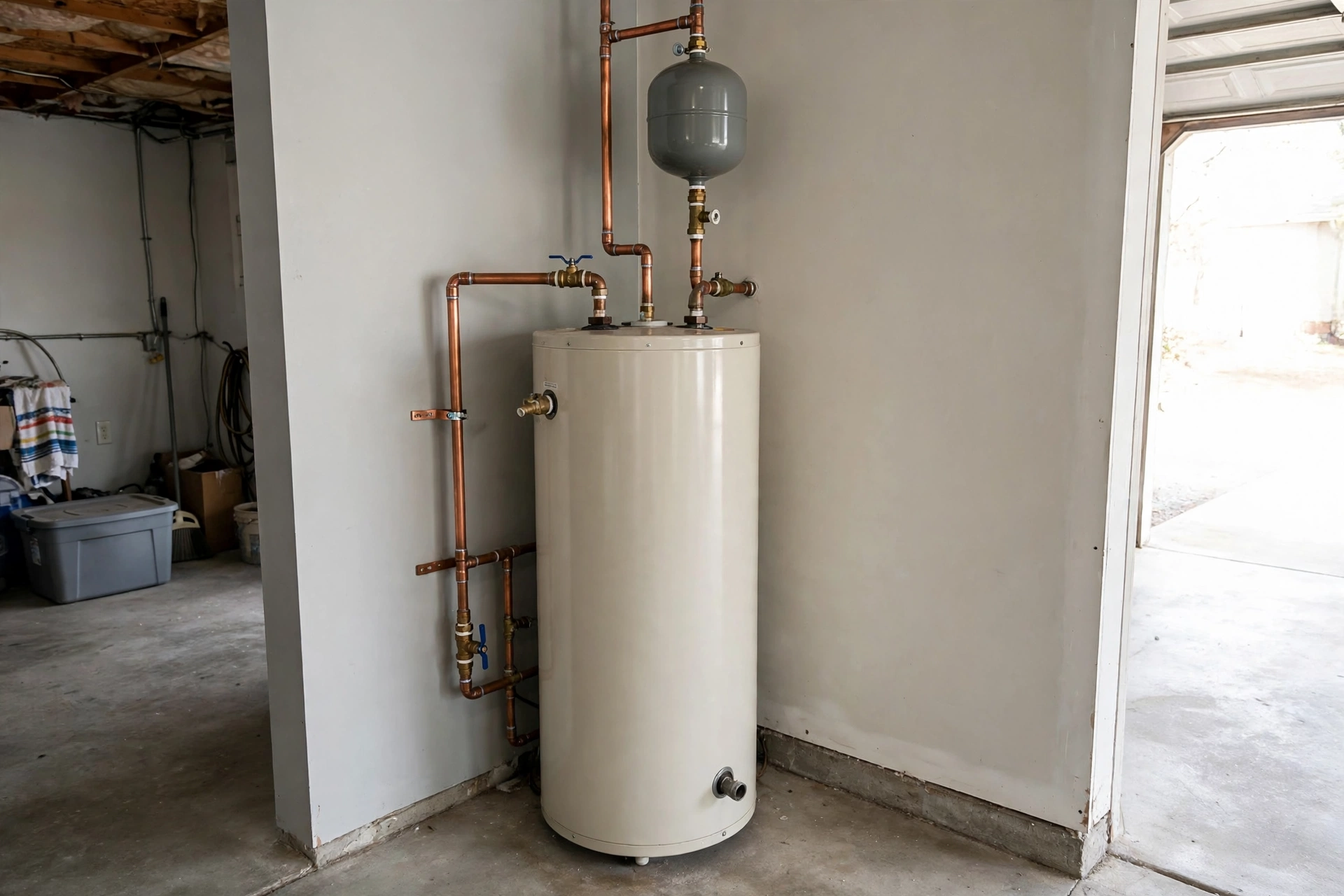
Newer homes also tend to hide their heaters behind finished garage walls, storage systems, or water softener equipment, which makes routine checks easy to postpone. A homeowner may not notice a slow drip at a connection, a relief valve discharge, or mineral crust forming at a joint until a stain appears on drywall or a puddle spreads across the garage floor. Taking a quick look at the heater area each season, noting the manufacture date on the data plate, and listening for changes in heating sounds gives a contractor useful history when a visit becomes necessary. Small observations recorded early often explain a failure that looks sudden later.
When a Loop 303 homeowner faces a first replacement, the conversation usually covers household size, simultaneous use, fuel type, and the physical space available. A growing family that runs two showers plus a dishwasher on school mornings needs a different answer than a couple with a predictable routine and one bathroom in regular use. Tankless options suit some layouts well, especially where floor space is tight, while a tank may suit a home with steady, predictable demand. The overview of tankless water heater installation and repair explains how that choice is weighed for West Valley homes.
Not Sure What Your Water Heater Needs?
Describe the symptoms and request service anywhere in Peoria and the West Valley.
Marley Park Craftsman Streets and Family Sized Hot Water Needs
Marley Park is a 950 acre master planned community in central Surprise, built between 2005 and 2020 with Craftsman style homes, tree lined streets, neighborhood parks, and the Marley Park Plaza gathering place. Families here often live with children, pets, guests, and a calendar full of school and sports commitments, which means hot water demand spikes sharply in the morning and again in the evening. A tank that holds enough for a quiet afternoon can still fall short when three people shower in sequence, the washing machine starts, and the kitchen sink runs hot for dishes. That peak pattern, more than the size of the house alone, shapes the right heater answer.
Homes from the Marley Park build era are now old enough that many original tanks are approaching or passing the Arizona range of 6 to 10 years, even though the neighborhoods still feel new. A homeowner might notice showers cooling sooner, recovery taking longer after laundry, or a faint rumble from the garage during heating cycles. Those signs point to sediment and wear rather than a sudden breakdown, and they give a household time to plan. A contractor can check the tank age, inspect the anode rod, test delivered temperature, and discuss whether maintenance, repair, or replacement fits the remaining life of the unit.
Laundry and kitchen habits deserve attention in a family home because they compete directly with showers for hot water. A household that washes bedding, sports gear, and towels on weekends places weekend peaks on the heater that weekday routines never reveal. Spacing large loads, noting which fixtures run together, and describing the busiest hour of the day helps a contractor size a replacement for real life rather than for an average that no one actually lives. For a closer look at household demand, sizing a water heater for a large household covers the same questions in plain terms.
Hot Water Trouble at Home?
Tell us what your unit is doing and request service.
Sun City Grand Fairways and Smaller Homes With Steady Routines
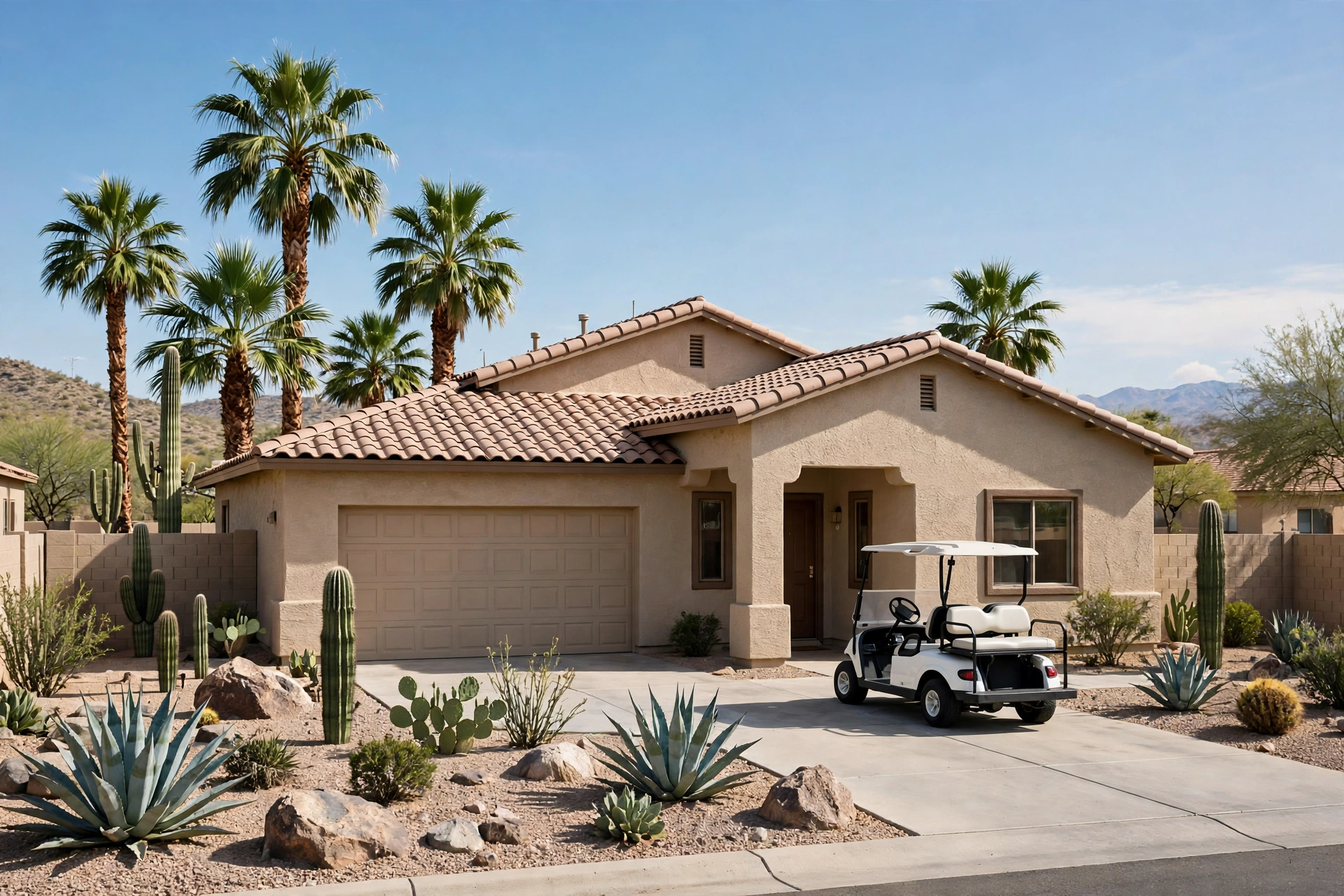
Sun City Grand, now branded as The Grand, is a Del Webb 55 plus community in Surprise with about 9,800 homes built between 1996 and 2005, plus golf courses, clubhouses, pools, tennis, and pickleball. Homes here are generally single level, with courtyards, screened rooms, and extended garages that often hold the water heater alongside storage and hobby gear. Routines tend to be steadier than in a family neighborhood, with predictable morning showers, regular laundry, and guests who visit for golf trips, holidays, or extended winter stays. A heater in this setting may see lighter daily use but still faces the same hard water and garage heat as every other Surprise home.
Age is the central fact for many Sun City Grand heaters. A home built in the late 1990s or early 2000s has likely seen at least one heater replacement already, and the current unit may be approaching the end of its own span without obvious drama. Quiet decline shows up as slightly cooler showers, a longer wait for hot water at a distant bathroom, or a tank that needs more time to recover after guests arrive. Because routines are steady, homeowners often notice small changes quickly, which is an advantage when the goal is to plan a replacement before a leak forces the issue.
Guest visits change the equation for a smaller home in a way that surprises some owners. Two visitors staying for a week can double shower demand, add laundry loads, and keep the kitchen busy in a way that a couple living alone never experiences. A tank sized for two steady users may still cope, but recovery time becomes the limiting factor when showers stack up. Describing guest patterns honestly during a visit helps a contractor judge whether the current unit can keep up, whether maintenance will restore performance, or whether a different size or style fits the next chapter of the home.
Wondering Whether to Repair or Replace?
Request service and get a straight answer about your unit.
Surprise Stadium Season and Houses Full of Visiting Baseball Fans
Surprise Stadium opened in the early 2000s as part of the Surprise Recreation Campus near Bullard Avenue, and each February and March it hosts the Kansas City Royals and Texas Rangers for spring training, with open morning practices and a festival atmosphere across the city. The Arizona Fall League Surprise Saguaros play later in the year, and the Recreation Campus also holds the tennis and racquet complex, the aquatic center, the library, and Surprise Community Park with its fishing pond. For homeowners near the stadium and city center, baseball season often means friends and relatives arriving from colder states, filling spare bedrooms and keeping bathrooms busy from morning until game time.
A house full of baseball visitors tests a heater in bursts rather than steadily. Mornings bring back to back showers, afternoons bring laundry and kitchen cleanup, and evenings bring another round of showers after a day in the sun. A tank with sediment heats slowly between those bursts, so the last shower of the morning may feel noticeably cooler than the first. A tankless unit with scale on the heat exchanger may struggle when two showers and a sink open together, delivering uneven temperatures that frustrate guests. Noting which fixtures were running when the temperature dropped gives a contractor a clear clue about capacity versus scale.
Households that host every spring can use the quieter months to get ahead of the next visit. Checking the tank age, arranging a flush and anode inspection, and confirming the thermostat setting of 120 degrees all help the heater face a busy week with less strain. If the unit is already showing rust tinted water, persistent rumbling, or moisture at the base, a pre season conversation about replacement avoids a mid visit failure. A local contractor can time the work around travel plans and game schedules, so the house is ready before the first guest arrives.
Seeing Leaks, Rust, or Strange Noises?
Do not wait for a small fault to flood the garage. Request service now.
White Tank Foothills, Larger Lots, and Longer Pipe Runs
White Tank Mountain Regional Park covers nearly 30,000 acres at the western edge of Surprise and ranks as the largest regional park in Maricopa County, with the Waterfall Trail, Hohokam petroglyphs, a nature center, and miles of hiking and biking trails. Neighborhoods near the foothills, including Sterling Grove and other newer master plans, offer mountain views, larger lots, and homes set farther apart than in the central city. Some properties near the mountains include acreage or horse facilities, with outbuildings, wash areas, and long pipe runs that complicate the simple picture of one heater serving one house. Distance and layout matter as much as heater size in these homes.
Longer pipe runs mean longer waits for hot water, especially at a bathroom or laundry area far from the garage. Water sitting in a long run cools between uses, so the first person to turn on a tap in the morning waits while cold water clears the pipe. Insulation on exposed pipe helps, and a recirculation discussion may fit homes where the wait has become a daily annoyance rather than an occasional quirk. A contractor maps the layout, checks which fixtures wait longest, and talks through whether the heater, the piping, or both deserve attention.
Desert dust and open lots add a maintenance note for foothill homes, where garage doors open to blowing dust during windy days and monsoon season brings sudden storms in July and August. Dust settles on heater vents, burners, and controls, and a cluttered garage can restrict airflow around the unit. Keeping the area around the heater clear, checking vents for blockages, and noting any change in burner behavior helps a contractor distinguish dust related trouble from wear inside the tank. Routine water heater maintenance visits catch those exterior issues before they affect heating performance.
Planning a New Water Heater?
Request service and talk through sizing, fuel type, and placement.
Original Townsite Homes Near Grand Avenue and Bell Road
The original townsite of Surprise occupies about a square mile near Grand Avenue, between Dysart Road and El Mirage Road and between Bell Road and Greenway Road, where the city began as farmland platted into lots for agricultural workers. Surprise was founded in 1938 and remained small until the 1990s, when Sun City Grand and later master planned communities drove rapid growth. Homes in the townsite area and the established core south of Bell Road and Greenway tend to be older than the Loop 303 subdivisions, with mature trees, smaller lots, and heaters that have been replaced at least once. Their plumbing reflects earlier eras, with pipe materials and layouts that differ from new construction.
In an older Surprise home, the heater rarely stands alone as a problem. Supply lines may show age at joints and valves, shutoffs may resist turning, and a slow leak at a connection can hide behind stored items in the garage. A homeowner might first notice a damp garage floor, a musty odor near a wall, or a water meter that moves when no fixture is running. Each clue helps a contractor decide whether the tank, a connection, or a nearby pipe deserves the closest look. Rushing to replace a tank without checking the surrounding plumbing risks leaving the real leak untouched.
Repair decisions in the townsite area often balance preservation of the existing layout against the benefits of a newer configuration. A like for like tank swap keeps pipe work simple, while a move to a tankless unit or a different tank size may require changes to fuel, venting, or electrical supply that deserve a careful site assessment. A contractor checks the data plate, measures clearances, and assesses how the household uses hot water before suggesting a path. When a leak is the presenting problem, leaking water heater repair guidance explains what to note and what to leave undisturbed until a visit.
Related: Leaking Water Heater Repair, Signs of Water Heater Failure in Older Homes
Want a Second Opinion on Your Unit?
Request service and describe what your water heater is doing.
Desert Dust, Garage Heat, and Tankless Care in Surprise
Summer temperatures in the Sonoran Desert frequently pass 110 degrees from May through September, and a Surprise garage absorbs that heat through the roof, walls, and door. Tank heaters stored in that air face thermal stress from the outside while hard water scales them from the inside, a combination that explains why Arizona tanks so often land in the 6 to 10 year range. Tankless units face a different version of the same climate, with electronics, sensors, and heat exchangers working in hot, dusty air. Keeping the garage area ventilated, clear of clutter, and clear of chemical storage near the heater helps every type of unit breathe and operate as designed.
Tankless care in Surprise centers on descaling, because mineral scale forms on the heat exchanger whenever hard water is heated, and the effect compounds with heavy use. A unit that once delivered steady hot water may begin to fluctuate, take longer to reach temperature, or show reduced flow at fixtures as scale narrows passages. Descaling flushes the heat exchanger with a cleaning solution circulated through the unit, restoring heat transfer without opening the sealed components. Many contractors in hard water areas discuss descaling as a regular habit rather than a one time fix, with timing shaped by household use and water hardness at the street.
Homeowners can support a tankless unit between visits by watching for early warnings and keeping the surroundings clean. Reduced flow at a single fixture may point to an aerator clogged with mineral deposits, while reduced flow and temperature swings across the house point more toward the unit itself. Noting when symptoms began, whether they follow heavy use, and whether any fixture behaves differently helps a contractor narrow the search quickly. The descaling discussion in descaling a tankless unit in hard water covers the process and the signs that suggest it is time.
- Watch for temperature swings when two fixtures run together, which often signals scale on the heat exchanger.
- Keep the area around a garage heater clear of boxes, paint cans, and stored chemicals.
- Note the manufacture date from the data plate so age is clear before any visit.
- Check exposed pipe insulation in the garage, especially on long runs to far bathrooms.
Not Sure What Your Water Heater Needs?
Describe the symptoms and request service anywhere in Peoria and the West Valley.
Planning a Replacement Before a Surprise Tank Gives Out
A planned replacement starts with information, not with a rush to choose a unit. The data plate gives age, capacity, and fuel type, while household notes give demand: how many people shower on a busy morning, whether laundry runs daily or weekly, and whether guests visit for spring training, holidays, or extended winter stays. A contractor combines those facts with a look at the garage space, venting path, gas or electrical supply, and drain route. That site picture prevents the common mistake of copying a neighbor's heater choice into a home with a different layout and a different routine.
Timing matters in Surprise because the busiest hosting seasons arrive on a predictable calendar. Spring training fills guest rooms in February and March, holiday visits cluster in winter, and summer heat makes any garage work less pleasant. Planning a replacement in a quieter stretch gives a household time to compare tank and tankless paths, confirm measurements, and schedule work without guests waiting for showers. If the current tank already leaks, shows rust through the jacket, or trips a relief valve repeatedly, waiting for a convenient season is no longer wise, and a prompt assessment takes priority over calendar preferences.
Desert Valley Water Heater Pros connects Surprise homeowners with independent local plumbing contractors for this planning conversation, whether the need is a repair that extends the life of a sound unit or a replacement that resets the clock. Requesting service early, while the heater still works, leaves room for a measured decision and a tidy installation. Homeowners who prefer to read ahead can read water heater installation considerations and arrive at the visit with questions about space, fuel, and household demand already in mind.
Related: Tankless Water Heater Installation and Repair, Water Heater Repair in Glendale, Water Heaters in New Build Homes, Request Service
Hot Water Trouble at Home?
Tell us what your unit is doing and request service.
Water Heater Questions in Surprise?
Tell us what your unit is doing and where you are, and we will help arrange the next step.
How does a newer heater in Surprise differ from an older tank in Sun City Grand?
A newer Loop 303 heater is often still on its first unit, with age measured in a few years, while a Sun City Grand home built between 1996 and 2005 may be on its second or third tank. Newer units tend to fail from scale buildup and component wear, while older installations add questions about surrounding pipe age, valve condition, and prior replacement work. Both face the same hard water and garage heat, so age plus symptoms matters more than neighborhood alone. A contractor reads the data plate and inspects connections to place each unit in its own timeline.
Why does my Surprise home run out of hot water when guests visit for spring training?
Guest visits stack demand in a way ordinary routines never do, with back to back showers, extra laundry, and a busy kitchen all drawing hot water in the same hours. A tank with sediment recovers slowly between showers, so the last shower feels cooler even though the first felt fine. A tankless unit with scale may struggle when two fixtures open together. Noting how many showers ran, in what order, and which fixtures were also running helps a contractor judge whether capacity, recovery, or scale is the limiting factor.
What causes white crust on faucets and showerheads in Surprise?
White crust is mineral deposit left behind when very hard water evaporates, with calcium and magnesium forming a chalky layer on fixtures, aerators, and showerheads. The same minerals settle inside a tank as sediment and coat a tankless heat exchanger as scale, so visible crust at fixtures often signals invisible buildup inside the heater. Cleaning aerators restores flow at a single tap, but heater performance needs its own check. A contractor can flush a tank or descale a tankless unit and discuss softening options for the household water supply.
Should I have a tankless unit descaled in Surprise, and how often?
Descaling matters in Surprise because hard water forms scale on the heat exchanger with every heating cycle, gradually reducing heat transfer and flow. Many contractors in hard water areas discuss descaling as a regular habit, with timing shaped by household use, water hardness, and any softening equipment already in place. Signs that descaling is due include temperature swings, longer waits for hot water, and reduced flow across fixtures. A contractor can inspect the unit, perform the descale, and suggest a rhythm that fits the home rather than a generic calendar.
How do I know if a leak is coming from the heater or a nearby pipe?
Start by checking whether the tank base, inlet and outlet connections, and relief valve discharge pipe are wet, and whether a puddle returns after the floor is dried. A leak at the tank base or a connection points toward the heater, while a dry tank base with dampness farther along a wall points toward nearby piping. Warm spots on a slab floor, damp baseboards, and the sound of running water with fixtures closed all suggest pipe trouble beyond the unit. Describe the location, timing, and water temperature when requesting service so a contractor knows where to look first.
What size heater suits a Marley Park family home with three bathrooms?
Size depends on simultaneous use more than bathroom count alone, including how many showers run together, whether laundry and dishes overlap with bathing, and how often guests stay over. A family with staggered showers and spaced laundry places lighter peak demand on a heater than a family with three showers before school plus a washing machine running. Fuel type, recovery speed, and tankless flow capacity all shape the answer alongside tank volume. A contractor assesses the busiest hour of the day, measures the space, and suggests a size matched to that peak pattern.
Water Heater Questions in Surprise, Answered
Not seeing your question? Request service and tell us what your unit is doing.
Request Service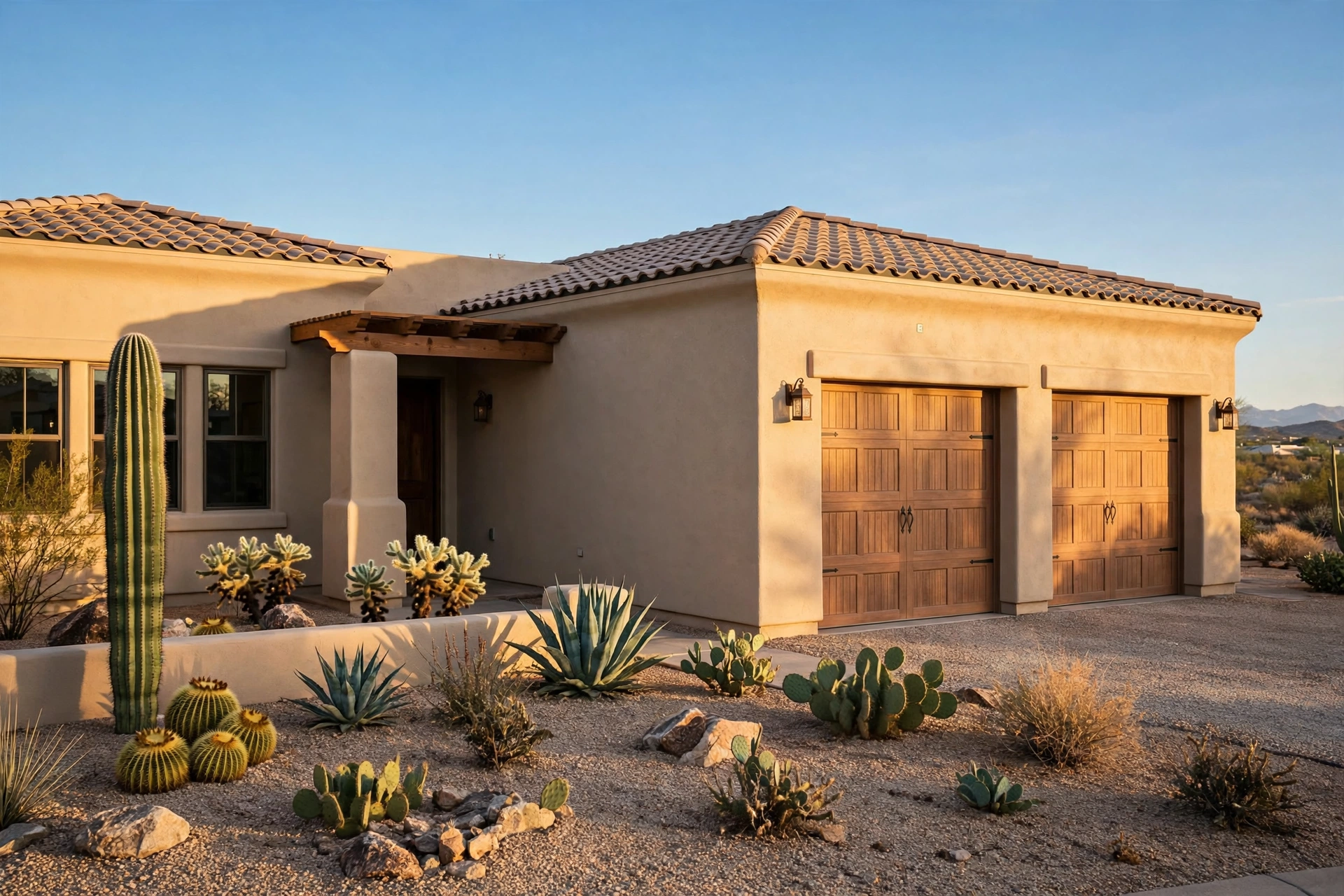
 Hot Water, Handled
Water Heater Repair in Surprise
Surprise pairs fast growing Loop 303 neighborhoods with established communities like Marley Park and Sun City Grand, so heater ages vary widely from one street to the next. Spring training visitors, family routines, and active adult schedules all place different demands on hot water through the year. Desert Valley Water Heater Pros connects Surprise homeowners with independent local plumbing contractors who assess the unit, the layout, and the household pattern before suggesting repair or replacement. Request service through this site to describe what the heater is doing and arrange a local visit.