Tankless Water Heater Installation and Repair
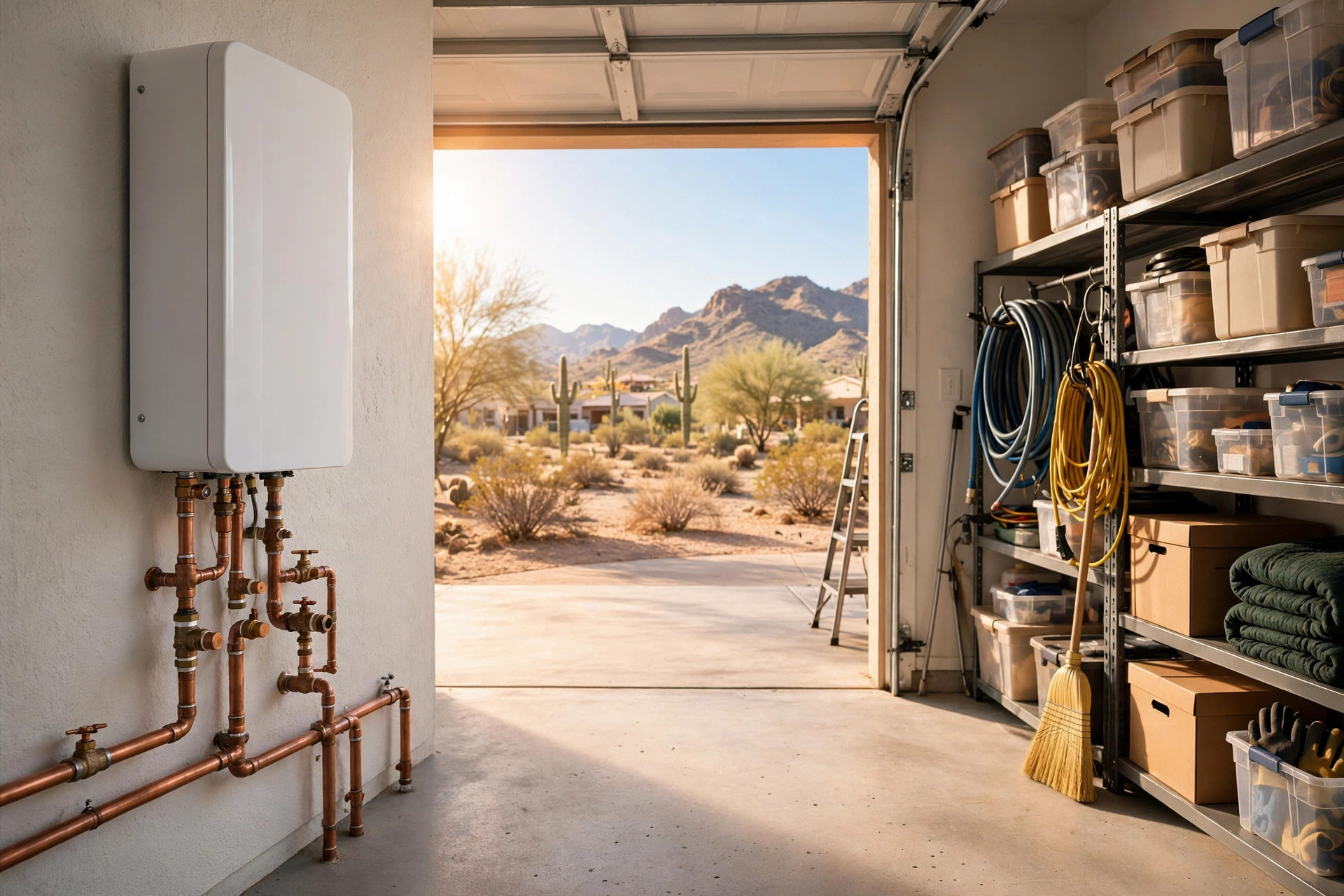
Tankless water heaters heat water only when a tap opens, which suits many Peoria homes where garage space is t...
Learn moreMaintenance is the unglamorous habit that decides whether a water heater serves a Peoria household well for years or becomes a recurring source of cold showers and garage puddles. The work itself is straightforward: flush what has settled, check what protects the tank, test what keeps the system safe, and look closely at every connection. The reason it matters so much here is local. Valley water carries a heavy mineral load, garage temperatures climb past 110 degrees in summer, and dust from monsoon storms finds its way into burners, vents, and pilot assemblies. Desert Valley Water Heater Pros connects homeowners with independent contractors in our network who handle maintenance visits across Peoria, from the neighborhoods around Arrowhead Towne Center to the newer streets near Loop 303.
A maintenance visit is also a diagnostic visit. The contractor sees the flush water, the anode rod, the valve behavior, and the connection condition, and those observations reveal how the unit is aging long before a breakdown announces it. Homeowners who keep an annual rhythm rarely meet their water heater in crisis mode. Homeowners who skip maintenance for years often meet it at the worst possible moment, with a leak, a failed element, or a tank that rumbles loud enough to hear from the next room. This page explains each part of a maintenance visit and how the rhythm adapts to snowbird schedules, large households, and tankless units.
In soft water regions a water heater can coast for years with little attention. Peoria is not one of those regions. Every gallon of Valley water leaves mineral traces behind, and heated water drops those minerals faster than cold water does. A tank that never gets flushed accumulates a sediment layer that insulates the bottom, overworks the burner or elements, and shrinks usable hot water volume. A tankless unit that never gets descaled narrows its heat exchanger passages until flow and temperature both suffer. Annual visits interrupt both patterns before they harden into damage.
Heat adds urgency. Garage temperatures past 110 degrees stress seals, controls, and wiring, while dust coats burner ports and pilot assemblies during monsoon season. An annual visit catches a stiff valve, a corroded connector, or a vent section that has shifted, all small findings that stay small only when found early. For a city of around 190,985 people spread across established neighborhoods and new growth alike, the pattern holds everywhere: steady care beats crisis repair, and the households that maintain annually spend less time thinking about hot water at all.
Describe the symptoms and request service anywhere in Peoria and the West Valley.
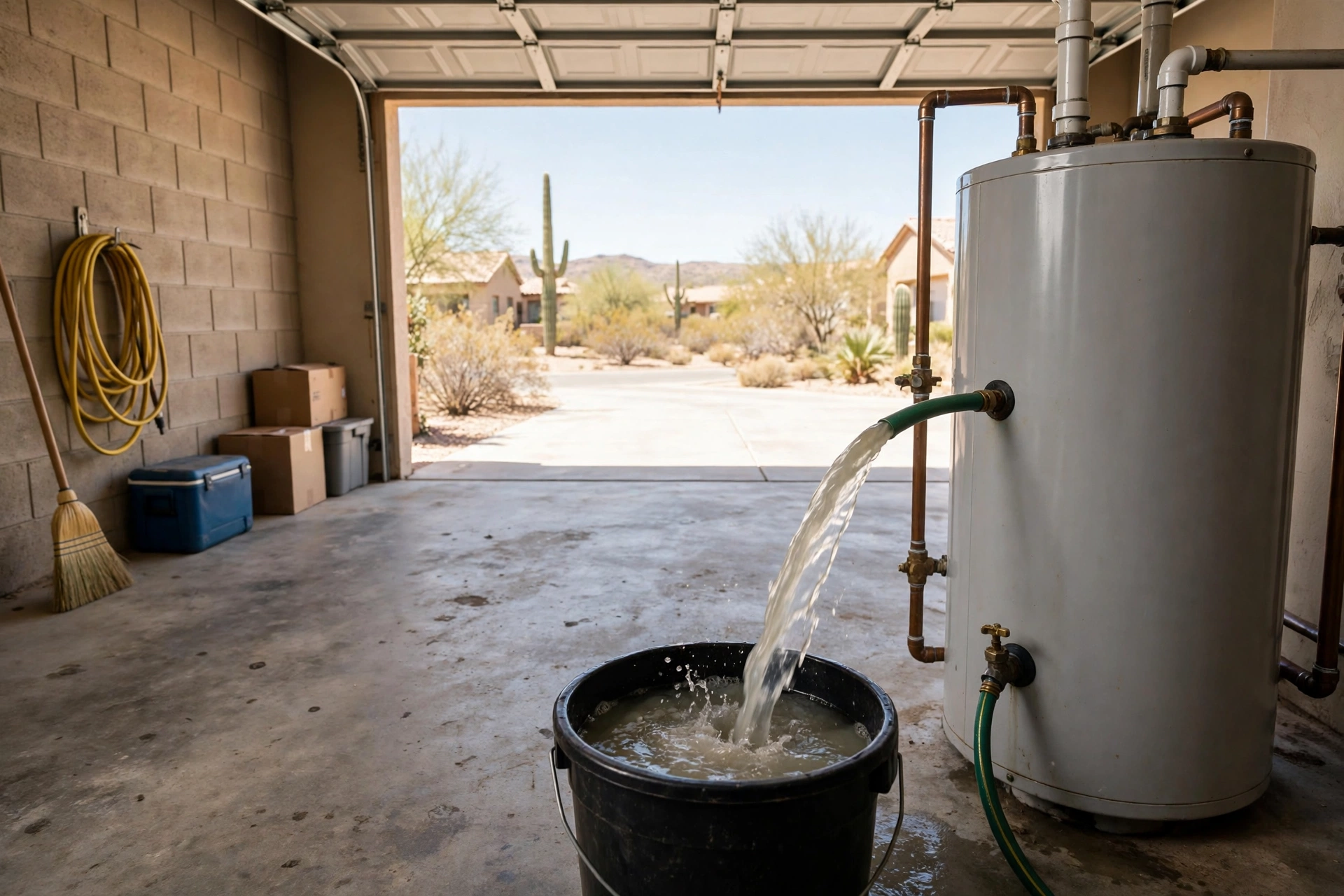
Flushing a tank means draining water from the bottom drain valve to carry settled sediment out with it. The contractor connects a hose to a safe drainage point, opens the valve carefully, and watches the water run. Early in a flush the water often runs cloudy or gritty, and on a tank that has gone years without care it may carry visible mineral flakes. The flush continues until the water runs clear, and the contractor may stir the tank gently by cycling the cold supply to loosen sediment that has settled into corners.
The first flush on a neglected tank sometimes reveals how much damage sediment has already done. Rumbling often quiets immediately, recovery speeds up, and hot water lasts longer on the next busy morning. Tanks with heavy buildup may need a follow up flush after a period of normal use, since loosened scale continues to settle. Homeowners should never force a stuck drain valve or drain a tank without a plan for where the water goes, because scalding water and flooded garages turn a routine task into a hazard. A contractor handles the sequence safely and checks the valve itself for drips once the flush ends.
Tell us what your unit is doing and request service.
The anode rod is a sacrificial metal rod inside the tank that corrodes in place of the tank lining. As long as the rod has life left, the lining stays protected. Once the rod is consumed, corrosion turns its attention to the tank itself, and rusty water and tank leaks follow. Checking the rod means removing it from the top of the tank and inspecting how much metal remains, a task that needs clearance above the unit and the right tools for a rod that may have seized in place after years of heat cycles.
Peoria hard water consumes anode rods faster than soft water does, which is why rod checks belong in every maintenance visit rather than every few years. A rod reduced to a thin wire or a bare core needs replacement promptly, while a rod with substantial metal left can continue with a note to check again at the next visit. The blog on water softeners and anode rods in Peoria explains how softened water changes rod behavior and what homeowners with softeners should watch. Rod replacement during maintenance protects the tank for years, and skipping it leaves the most important defense unexamined.
Request service and get a straight answer about your unit.
The temperature and pressure relief valve, known as the TPR valve, releases water when tank temperature or pressure climbs too high. It is a safety device, and testing it confirms it can still open and reseat. The contractor lifts the test lever briefly, watches for a burst of water through the discharge pipe, and confirms the valve seals again without a lingering drip. A valve that will not open, will not reseat, or drips constantly needs replacement, because a safety device that cannot be trusted is worse than no device at all in the false confidence it creates.
Leak checks cover every connection the eye can reach: water line unions, flex connectors, the drain valve, the TPR discharge, the expansion tank connection, and the tank seams themselves. The contractor looks for mineral crust, rust staining, damp insulation, and pooled water on the slab, and feels joints for slow moisture that has not yet formed a drip. Small findings get addressed during the visit when possible, and larger findings become a clear explanation with next steps. Homeowners who spot moisture between visits should request service promptly rather than waiting for the next annual date, since leaks in slab homes spread across garage floors quickly.
Do not wait for a small fault to flood the garage. Request service now.
Tankless maintenance centers on descaling, filter cleaning, and condensate checks. The contractor isolates the unit, circulates descaling solution through the heat exchanger, flushes it clean, and cleans the inlet filter that catches debris before it reaches the narrow passages. On condensing models the condensate drain gets cleared and checked, since a blocked drain can shut the unit down without warning. Vent terminations get a look as well, because monsoon dust and windblown debris collect at outdoor openings through the summer.
Households with tankless units sometimes assume the absence of a tank means the absence of maintenance, and that assumption reduces performance within a year or two. Scale narrows passages gradually, so the decline feels normal until temperatures swing and flow drops noticeably. Annual descaling keeps the exchanger open and the burner working within its intended range. The detailed guide to descaling a tankless unit in Peoria hard water explains the buildup process, and the page on tankless installation and repair covers sizing and fault diagnosis alongside routine care.
Request service and talk through sizing, fuel type, and placement.
Peoria households include many snowbirds and summer travelers who leave homes empty for weeks or months, and maintenance timing should fit that rhythm. A visit before departure lets the contractor flush or descale, check for leaks, confirm shutoff locations, and discuss travel season settings with the homeowner. A visit after return confirms the unit restarted cleanly, water runs clear, and no slow leak developed while the house sat quiet. That pair of visits brackets the empty months with attention at both ends.
Travel season care also covers the small details that matter in an empty house: a slow drip that would be noticed in a day by an occupied household can run for weeks unnoticed, and a garage that bakes past 110 degrees stresses a unit that sits idle. Homeowners in Sun City, Sun City West, and the 55 plus communities around Westbrook Village can read the seasonal guide to snowbird water heater shutdown for summer for travel planning, and the post on water heaters in 55 plus communities in Sun City covers patterns common to those neighborhoods.
Related: request a maintenance visit, gas unit care and repairs, electric unit care and repairs
Request service and describe what your water heater is doing.
Describe what your unit is doing and we will help arrange the next step.
Annual maintenance fits most Peoria homes because Valley water commonly measures 15 to 25 grains per gallon in hardness. Tanks need annual flushing and anode rod checks, while tankless units need annual descaling. Households with heavy use or very hard water effects may benefit from more frequent attention based on what the contractor finds.
A standard visit includes flushing or descaling, anode rod inspection on tanks, TPR valve testing, leak checks at every reachable connection, and a look at venting, filters, and the expansion tank. The contractor explains findings in plain terms and notes anything that needs attention before the next visit.
Some homeowners flush their own tanks, but the task involves scalding water, a drain valve that may stick or drip, and a drainage plan that protects the garage floor. A contractor handles the sequence safely, inspects the anode rod and valves during the same visit, and spots trouble a flush alone would miss.
The rod must be removed and inspected to know its condition. A rod reduced to a thin wire or bare core needs replacement, while a rod with substantial metal remaining can continue. Rusty hot water and a rotten egg smell at hot taps can signal rod trouble, but inspection gives the certain answer.
Yes, yearly descaling is the usual rhythm in Peoria hard water. Scale narrows heat exchanger passages gradually, reducing flow and causing temperature swings. Annual descaling supports the usual 15 to 20 year life for tankless units in Arizona and keeps performance steady between visits.
Both ends of a long absence benefit from attention. A visit before departure catches leaks and sets travel season steps, while a visit after return confirms clean startup and no slow leaks during the empty months. Snowbird households often schedule maintenance around their travel calendar for that reason.
Not seeing your question? Request service and describe what your unit is doing.
Request ServiceTankless water heaters heat water only when a tap opens, which suits many Peoria homes where garage space is t...
Learn more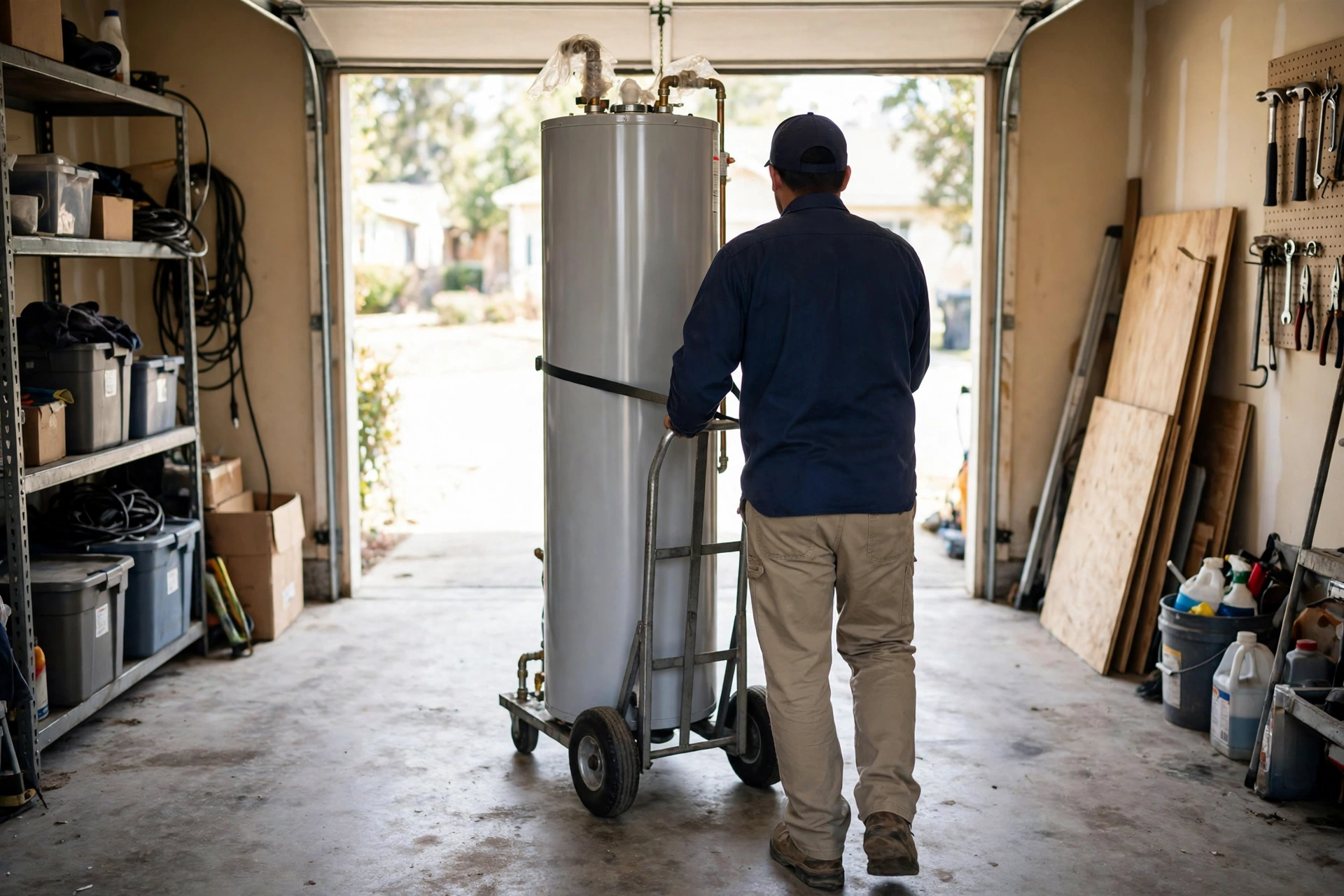
A water heater replacement becomes the right move when a tank leaks, rusts through, or stops heating reliably ...
Learn more
Water heater installation covers new setups in Peoria homes, from new builds in Vistancia to remodels and addi...
Learn more