Tankless Water Heater Installation and Repair
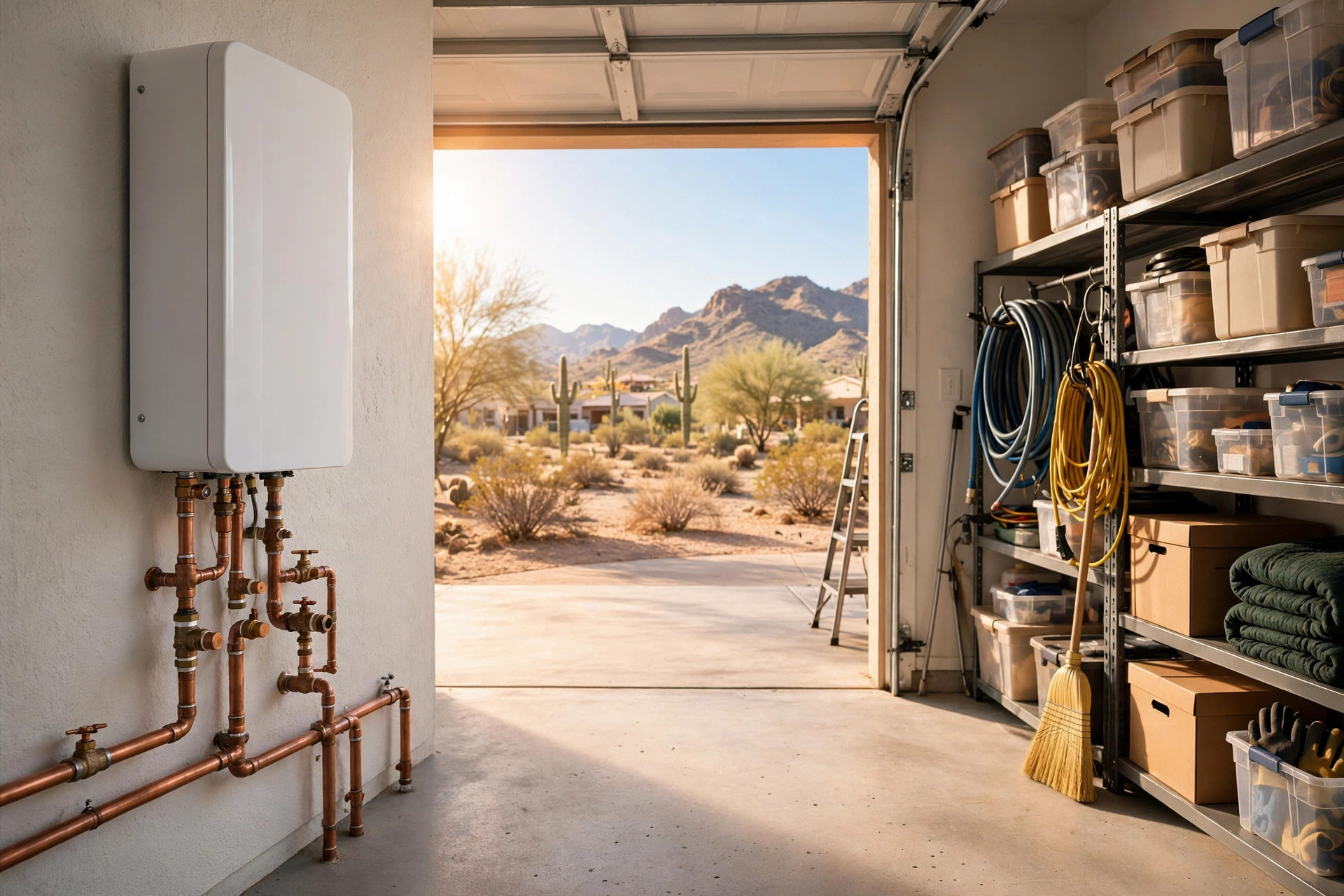
Tankless water heaters heat water only when a tap opens, which suits many Peoria homes where garage space is t...
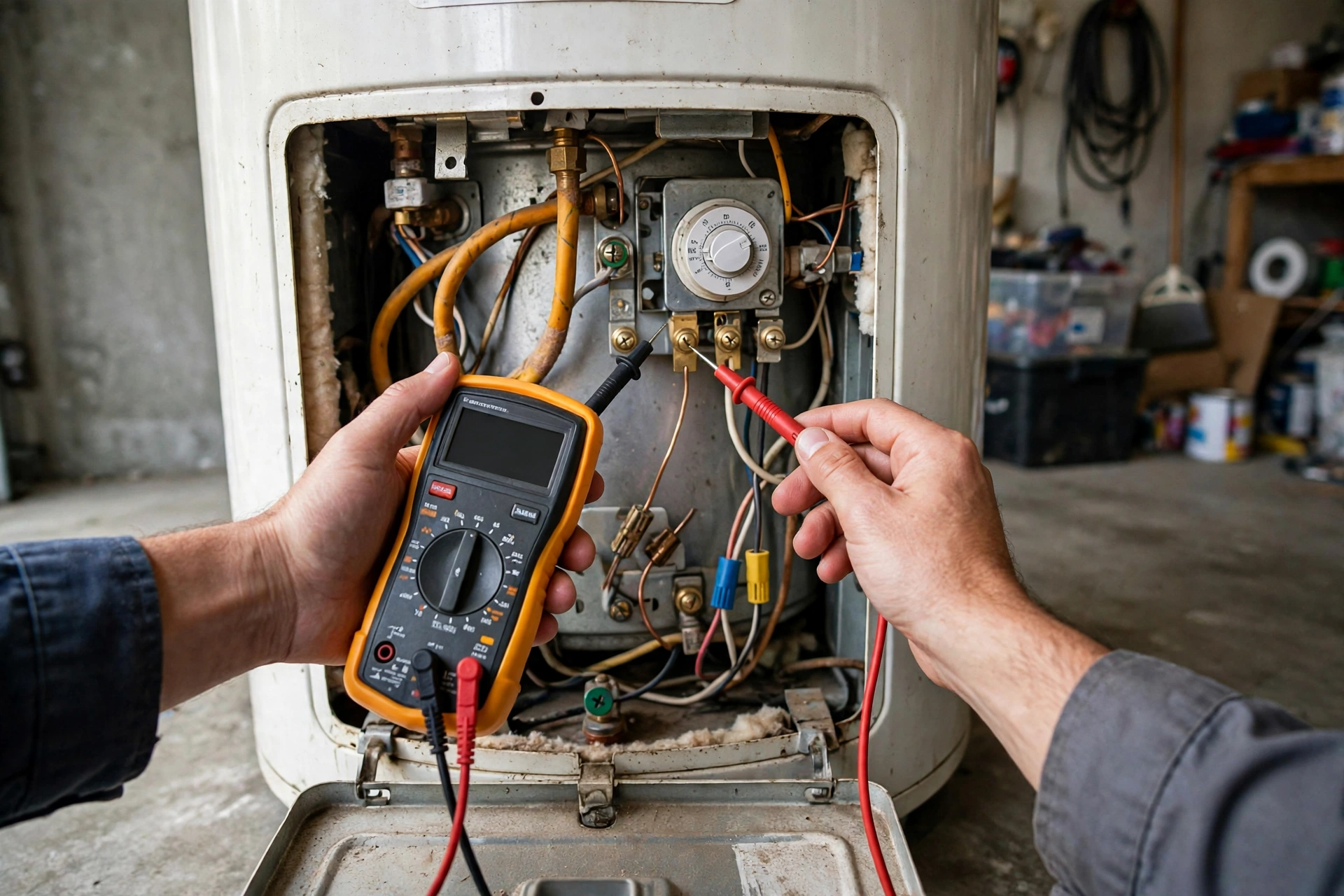
Learn moreAn electric water heater has no flame, no pilot, and no vent pipe, which makes its troubles quieter and sometimes harder to read. The signs show up at the tap instead: a shower that starts warm and fades, a tank that delivers a few gallons of hot water and then nothing, or water that never warms at all on a Monday morning in a home off Happy Valley Road. Behind those symptoms sit two heating elements, two thermostats, and the wiring and breaker that feed them, all working inside a tank that battles Peoria hard water every day. Desert Valley Water Heater Pros connects homeowners with independent contractors in our network who repair electric units across Peoria and the West Valley using meter testing and observation rather than guesswork.
Electric repairs follow a logical sequence, and understanding that sequence helps homeowners describe what they notice. The upper element and thermostat handle the first heating, then the lower element takes over for the bulk of the tank. When one element fails, the tank heats only part of its volume. When a thermostat sticks or drifts, temperatures swing or the tank overheats. When power delivery falters, nothing heats at all. This page walks through each fault, the testing that separates them, and the sediment story that runs underneath so many electric repairs in Arizona garages.
An electric tank holds water around two elements that sit inside the tank wall, one near the top and one near the bottom. Each element has a thermostat, and the upper thermostat directs power first to the upper element until the top of the tank reaches temperature, then hands off to the lower element. That handoff matters, because it explains why a failed lower element still allows a short burst of hot water while a failed upper element can leave the whole tank cold. Contractors test both elements and both thermostats as a system, since the symptom alone rarely names the failed part.
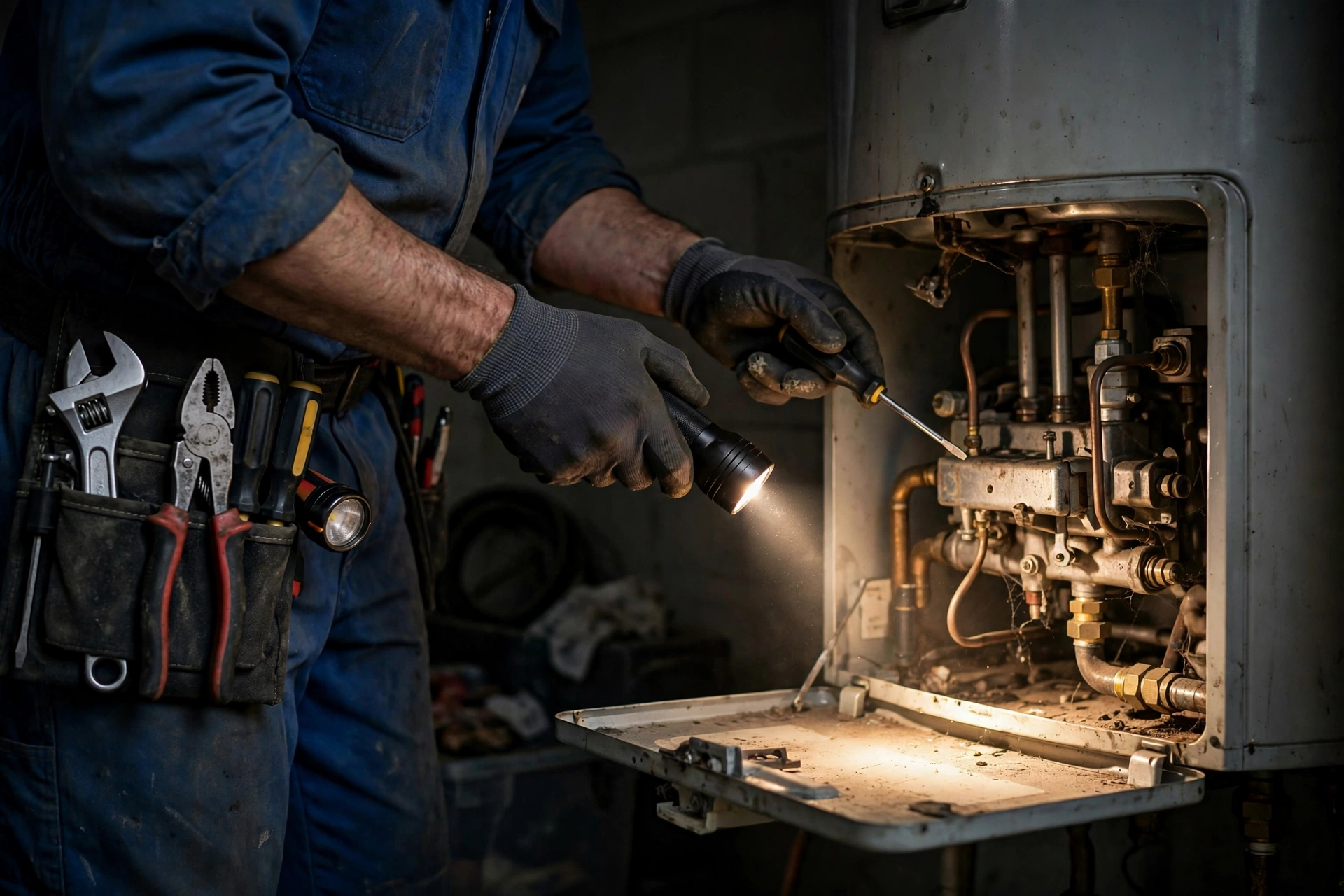
Peoria garages shape electric performance in ways homeowners rarely consider. Summer garage temperatures climb past 110 degrees, which stresses wiring insulation, thermostat housings, and connection points over years of heat cycles. Dust from monsoon season settles on electrical compartments and around access panels. A contractor opens those panels carefully, checks connections for heat discoloration, and tests with a meter before touching a part. That methodical approach prevents replacing a healthy element while the real fault sits in a thermostat or a loose connection.
Describe the symptoms and request service anywhere in Peoria and the West Valley.
Heating elements fail in a few recognizable ways. An element can burn out and stop heating entirely, short internally and trip the breaker, or become so coated with mineral scale that it overheats and fails early. Scale coating is the Peoria pattern: hard water deposits cling to the element surface, insulate it from the water, and drive its internal temperature higher with every cycle. The element eventually gives out, often with little warning beyond gradually shrinking hot water supply.
The symptom pattern points to which element failed. A failed lower element leaves the top portion hot, so showers start warm and fade fast. A failed upper element can leave the tank cold from the start, because the control sequence never hands off properly. A contractor drains enough water to access the elements safely, tests each one for continuity and resistance, and inspects for scale and corrosion before fitting a replacement. Flushing the tank during the same visit removes the sediment that helped kill the old element, and the guide to water heater maintenance explains the flushing rhythm that protects new elements.
Tell us what your unit is doing and request service.
Thermostats decide when each element heats and when it rests, so a faulty thermostat produces confusing temperature behavior. Water that scalds at one tap and runs lukewarm at another, a tank that seems to heat in bursts, or a unit that trips its high limit reset button again and again all point toward thermostat trouble. The high limit reset, a small button behind the upper access panel, trips when the tank overheats, and repeated trips mean the underlying cause needs diagnosis rather than repeated resets.
Testing separates thermostat faults from element faults. A contractor checks calibration, observes whether each thermostat hands off correctly, and confirms the tank reaches and holds 120 degrees, the commonly recommended setting, without overshooting. Stuck thermostats that keep an element heating past the set point waste energy and strain the tank, while thermostats that cut out early leave the household short on hot water. Replacing thermostats as a tested pair, when testing supports it, restores the coordinated heating sequence the tank was designed around.
Request service and get a straight answer about your unit.
Power faults masquerade as heater faults, and a careful contractor checks the power path before condemning the heater. A tripped breaker, a loose wire at the junction box, or a failing breaker that trips under load can all leave a healthy tank cold. The contractor confirms voltage at the unit, inspects connections for heat damage or looseness, and checks that the breaker holds under load. Homeowners can help by noting whether the breaker tripped, whether it trips again immediately, and whether any other circuits behaved strangely at the same time.
Safety discipline governs every power check. Power stays off while panels are open and connections are handled, and testing follows a step by step sequence with a meter. Homeowners should never remove access panels or handle wiring while power is connected, and a breaker that trips repeatedly should be left off until a contractor looks at the unit. If the fault sits in the home wiring or panel rather than the heater, the contractor explains that clearly so the homeowner can arrange the right help for that part of the system.
Do not wait for a small fault to flood the garage. Request service now.
Sediment is the slow companion to nearly every electric repair in Peoria. As hard water heats, minerals settle to the tank bottom and bake into a layer that grows thicker each year without flushing. That layer buries the lower element in sludge, forcing it to heat through insulation that was never part of the design. The element runs hotter, lasts fewer years, and eventually fails. The tank bottom overheats as well, which stresses the lining and speeds corrosion around the lower fittings.
Flushing removes loose sediment and reveals how much has hardened in place. On tanks that have never been flushed, the first flush may run cloudy for a long time, and the contractor may recommend a follow up flush after a period of normal use. Anode rod condition gets checked at the same time, since the rod protects the tank lining while sediment attacks it. Homeowners in 55 plus communities around Westbrook Village and Ventana Lakes, where tanks often serve smaller households for many years, benefit from the same flushing rhythm as larger households, because scale builds with time as well as with volume. The post on water softeners and anode rods in Peoria explains the protection side of the story.
Request service and talk through sizing, fuel type, and placement.
Electric repairs make sense while the tank itself stays sound. A failed element or thermostat on a mid life tank with a solid lining and a healthy anode rod is a straightforward fix that restores full service. The calculation changes when the tank leaks from the body, produces rusty water, or needs a third major component in a short span. Tank water heaters in Arizona usually last 6 to 10 years, and a tank near the end of that span with a failing lining will keep producing faults no matter how many parts are replaced.
Contractors in our network explain the tank condition honestly, including what the flush water looked like, what the anode rod showed, and whether corrosion appears at seams or fittings. Households in Surprise and Glendale hear the same plain assessment, because the decision logic does not change across the West Valley. When replacement fits better, the page on water heater replacement explains sizing and options. When repair fits better, the contractor tests the full heating cycle before leaving and notes the care rhythm that protects the fix.
Related: request electric water heater repair, expansion tank checks, failure signs in older homes
Request service and describe what your water heater is doing.
Describe what your unit is doing and we will help arrange the next step.
A failed lower element is a common cause, since only the top of the tank heats when the lower element stops working. Sediment buildup can produce a similar pattern by reducing usable volume and slowing recovery. A contractor tests both elements and flushes the tank to separate these causes.
Repeated trips of the high limit reset usually mean the tank is overheating, often from a stuck thermostat that keeps an element heating past the set point. A shorted element can also drive overheating. The reset should not be pressed again and again without diagnosis, since the underlying cause needs attention.
A shorted element, a wiring fault, or a failing breaker can all trip the breaker under load. A contractor tests the elements, inspects connections, and checks the breaker behavior with a meter. Leave a repeatedly tripping breaker off until the unit has been checked.
Symptoms overlap, so testing decides. A contractor checks each element for continuity and resistance and observes whether each thermostat hands off correctly during heating. Temperature behavior at taps plus meter readings together name the failed part far more reliably than symptoms alone.
Yes, mineral scale coats element surfaces and insulates them from the water, which drives element temperature higher and shortens element life. Valley water commonly measures 15 to 25 grains per gallon in hardness. Annual flushing and anode rod checks slow that damage and protect replacement elements.
Uneven temperatures can come from thermostat drift, a failed element heating only part of the tank, or mixing problems in the plumbing. A contractor checks thermostat calibration, element function, and temperature at several taps to trace the pattern. Note which taps misbehave and when the trouble began.
Not seeing your question? Request service and describe what your unit is doing.
Request ServiceTankless water heaters heat water only when a tap opens, which suits many Peoria homes where garage space is t...
Learn more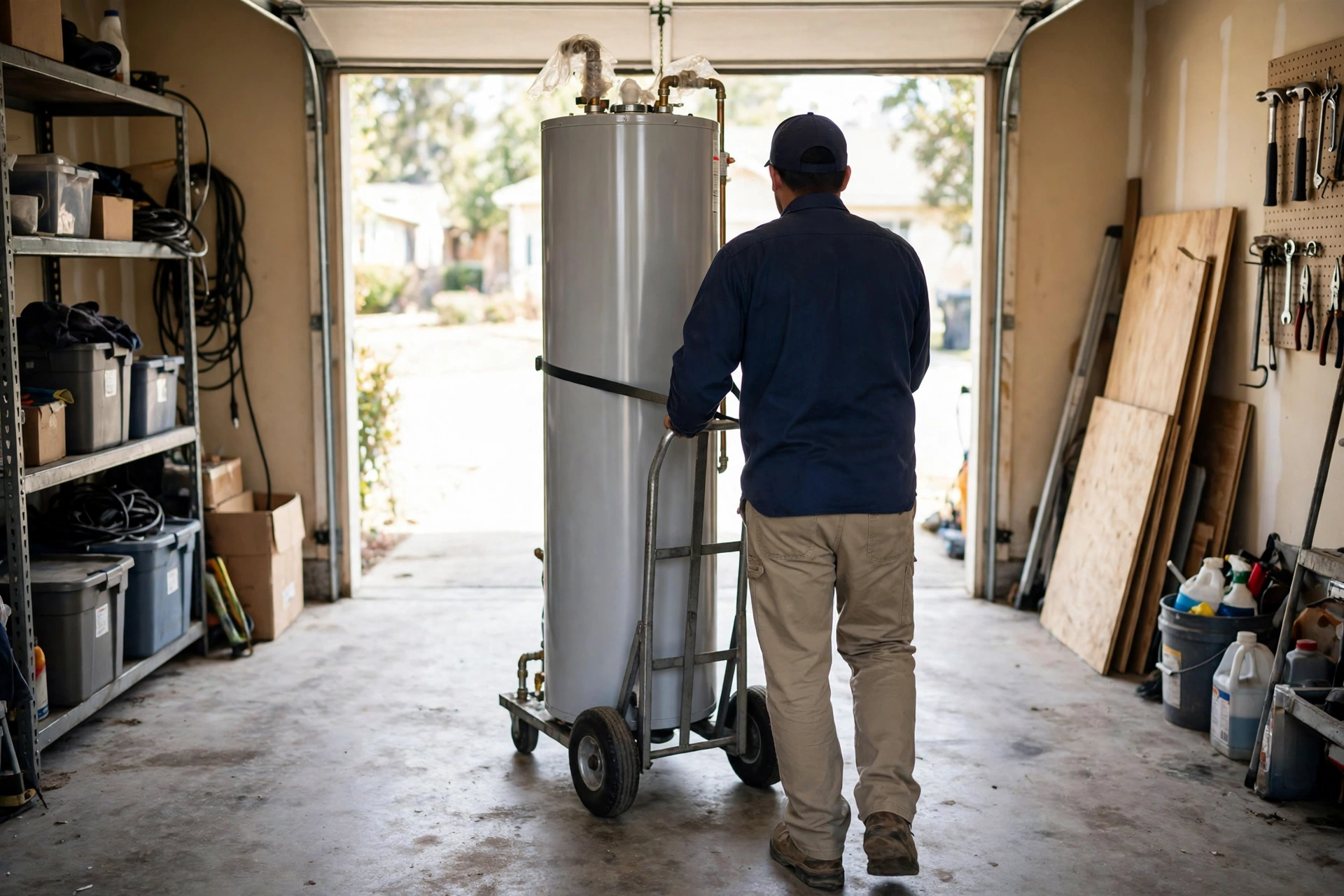
A water heater replacement becomes the right move when a tank leaks, rusts through, or stops heating reliably ...
Learn more
Water heater installation covers new setups in Peoria homes, from new builds in Vistancia to remodels and addi...
Learn more