Sun City Water Heaters: Repair, Replacement, and Care For 55 Plus Homes
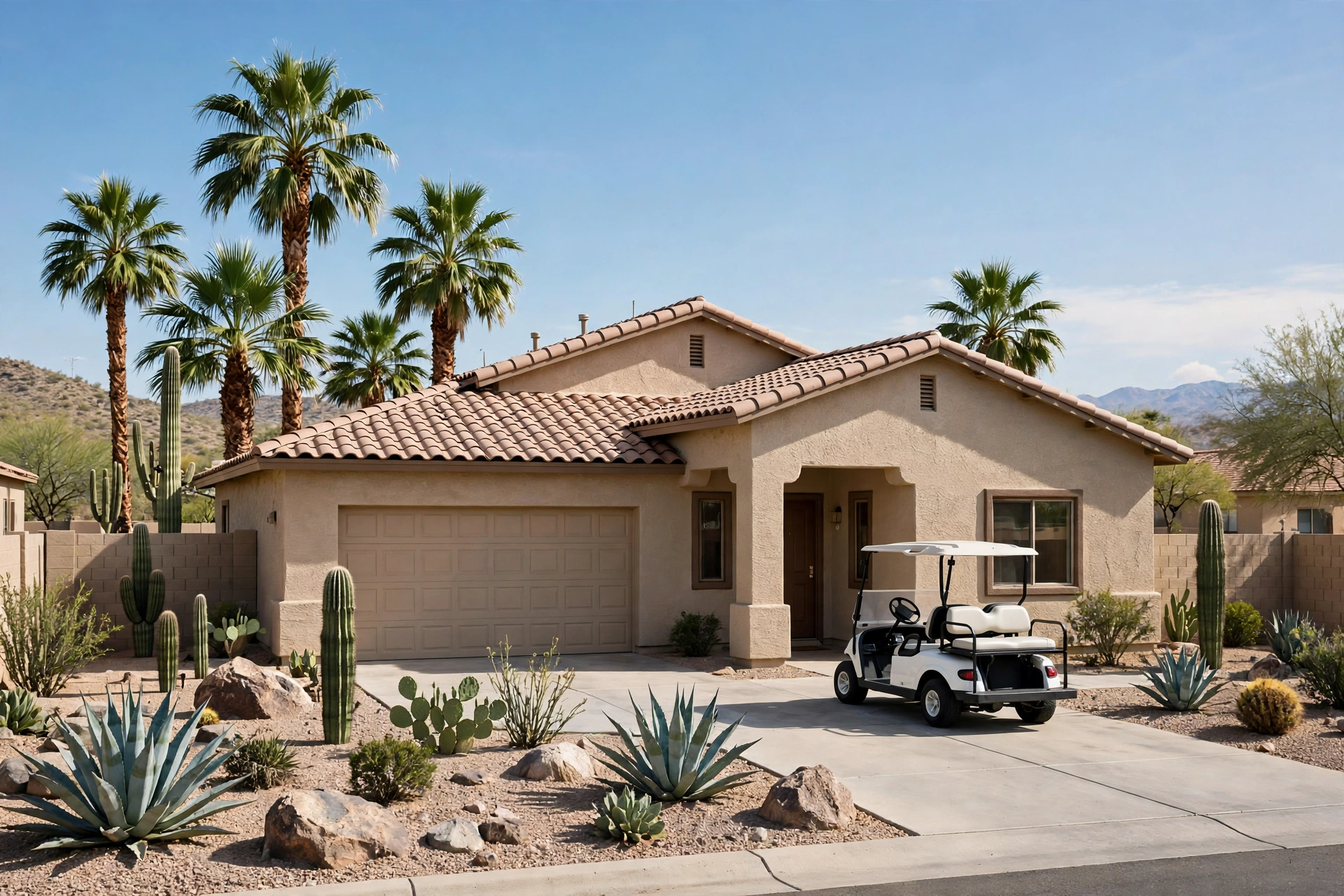
Sun City sits in unincorporated Maricopa County, just north of Glendale and west of Peoria, on former ranch land where Del Webb opened five model homes on New Year's Day in 1960. Streets curve and circle outward from recreation centers rather than following a strict grid, and golf cart travel is a normal way to reach the Bell, Lakeview, Mountain View, Marinette, Oakmont, Sundial, and Fairway centers. Most homes were built between 1960 and 1978, which means the original heater is long gone in nearly every house, and the current unit is one of several that have served the same small utility space. Desert Valley Water Heater Pros connects homeowners across Peoria and the West Valley with independent local plumbing contractors, so a Sun City household can request service without navigating a large company queue.
Serving Sun City, AZ 85351
Life in Sun City revolves around shared amenities in a way that shapes home water use. Residents swim, play pickleball and tennis, join more than 120 chartered clubs, bowl, and attend shows at the Sun Bowl amphitheater and Sundial Auditorium, often showering at a recreation center as well as at home. Golf courses thread through the community, with eight courses run by the Recreation Centers of Sun City plus independent clubs nearby, and many homes back onto a fairway or a greenbelt. A water heater here serves a smaller household, often one or two people, with guest demand rising in winter and quieter months when residents travel. This page explains how that rhythm affects tanks, tankless units, and the plumbing around them.
Del Webb Patio Homes From 1960 and the Heaters Inside Them
Del Webb built Sun City in phases, offering dozens of floor plans that shared a simple idea: single level living, a private patio, a compact kitchen, and rooms sized for one or two residents plus occasional guests. Patio homes, garden apartments, duplexes, and detached single level houses all appear on the same curved streets, often with a one car garage, an Arizona room added later, and a heater tucked into the garage or a small utility closet. That compact footprint means access can be tight, with storage, golf gear, and workshop benches crowding the space around the tank. A contractor visiting a patio home needs a clear path to the unit, the shutoff valves, and the floor beneath it before any useful inspection can begin.
Because construction spans nearly two decades, two homes a few streets apart can differ sharply in pipe materials, heater placement, and prior updates. An early 1960s home may have seen multiple remodels, with a bathroom added, a laundry area moved, or an Arizona room enclosed over what was once open patio space. A 1970s home may keep more of its original layout, with the heater still in its first location and the pipe runs still following the original plan. Reading the data plate, tracing visible pipe, and asking about past work gives a contractor the history that the walls hide.
Smaller homes do not mean smaller water problems. Very hard water deposits sediment in a compact tank just as steadily as in a large one, and a tank that serves one bathroom can still rust through, leak at the base, or lose recovery speed as scale builds. The advantage of a smaller home is that demand is easier to describe: one or two showers a day, a few laundry loads a week, and a kitchen sink that runs at predictable times. That clarity helps a contractor judge whether a repair will restore reliable service or whether the tank has reached the point where water heater replacement is the steadier path.
Not Sure What Your Water Heater Needs?
Describe the symptoms and request service anywhere in Peoria and the West Valley.
Bell Road and Grand Avenue Shopping Runs Meet Aging Tanks
Bell Road and Grand Avenue form the main corridors around Sun City, carrying residents to shopping, dining, medical offices, and the Loop 101 highway. Banner Boswell hospital serves the community, and medical and dental offices cluster along the corridors within a short drive of most homes. Daily routines often combine a morning at a recreation center, errands along Bell Road, and an afternoon at home, which means hot water use concentrates in the early morning and early evening with a quiet middle of the day. A tank that recovers slowly may still meet that pattern for years, masking decline until a guest visit or a laundry day exposes it.
Aging tanks in the Bell Road area show wear in familiar ways, though the timing varies with use and maintenance history. A homeowner may notice the shower cooling a minute sooner than it did last winter, a faint metallic taste or tint at the hot tap, or a soft rumble from the garage during heating. Each sign on its own can seem minor, and many residents adapt by showering a little faster or running the dishwasher at a different hour. Adaptation hides the trend, which is why noting the tank age and any change in sound, color, or temperature gives a contractor a timeline rather than a single snapshot.
Shopping corridor traffic also means service visits can be planned around errands and recreation schedules, with a morning visit leaving the afternoon open. A homeowner who requests service can describe the tank age, the symptoms, and the household routine in advance, so the contractor arrives prepared to inspect, test, and discuss options in one visit. For homes where the heater shares garage space with a golf cart, storage cabinets, or a workshop, moving items away from the unit before the visit saves time and lets the inspection cover valves, connections, and the drain path without interruption.
Hot Water Trouble at Home?
Tell us what your unit is doing and request service.
Golf Course Lanes, Single Level Plans, and Compact Utility Corners
Many Sun City streets follow golf course lanes, with homes facing fairways, lakes, or greenbelts and back patios opening to views of the North, South, Riverview, Willowcreek, Willowbrook, Lakes East, Lakes West, and Quail Run courses. Single level plans keep every room on one floor, which simplifies pipe runs but also means a leak at the heater can spread quickly across tile or laminate without a lower level to contain it. A small utility corner may hold the heater, a water softener, laundry connections, and storage in a few square feet, so a drip at any joint can be hard to spot until flooring shows damage. Regular visual checks of that corner, even a brief glance each week, catch trouble early.
Golf course homes often include enclosed Arizona rooms, screened patios, and additions that changed how the house is heated, cooled, and plumbed over the decades. A bathroom added during a remodel may sit farther from the heater than the original bathroom, with a longer wait for hot water that the owner accepts as normal. A laundry area moved to a garage corner may share a wall with the heater, making the whole corner damp if a connection weeps. Tracing which fixtures wait longest and which walls feel damp helps a contractor separate a heater fault from a layout consequence.
Compact spaces also shape replacement choices, because a new tank must fit through doorways, turn corners, and stand in a closet or garage bay with enough clearance for service. Shorter tanks, slimmer profiles, and wall mounted tankless units each solve a different space puzzle, but each needs a check of fuel, venting, and electrical supply before it can be recommended. A local contractor measures the existing space, notes the door widths and ceiling height, and discusses how the household uses each bathroom. That measured approach avoids ordering a unit that fits the demand on paper but cannot fit the room it must live in.
Wondering Whether to Repair or Replace?
Request service and get a straight answer about your unit.
Snowbird Seasons and Heaters That Sit Idle Through Summer
Many Sun City households split the year between Arizona and a cooler home state, leaving the desert house quiet through the hottest months and returning for the mild winter season. A heater left idle in a hot garage through summer faces a different kind of wear than one used daily: water sits in the tank, sediment settles undisturbed, seals dry, and a slow leak can run for weeks without anyone noticing. Returning residents sometimes find a musty garage, a damp floor, or a heater that refuses to produce hot water on the first morning back. Planning a shutdown routine before departure and a restart check on return prevents most of those unwelcome surprises.
Shutdown habits vary with the length of absence, the type of heater, and whether anyone will check the house while the owner is away. Some households set the thermostat to a vacation setting, others shut the water supply valve to the heater, and others arrange for a neighbor or a local contractor to look in during the summer. Each approach has tradeoffs involving stagnant water, pressure, and the condition of valves that sit untouched for months. The seasonal guide to snowbird water heater shutdown for summer walks through those choices so a homeowner can discuss a plan that fits the length of travel and the layout of the house.
Leak detection deserves special attention for a house that stands empty, because early warning matters more when no one is home to hear dripping or see a puddle. Smart leak detectors placed near the heater, washing machine, and water softener can alert an owner away from home, though they work well as part of a broader plan that includes shutoff habits and periodic checks by a trusted person. A contractor can suggest detector placement during a maintenance visit, check the drain path from the heater pan, and confirm that the relief valve discharge leads somewhere safe. The overview of smart leak detectors for traveling homeowners explains placement and limits in plain language.
Related: Snowbird Water Heater Shutdown for Summer, Smart Leak Detectors for Traveling Homeowners
Seeing Leaks, Rust, or Strange Noises?
Do not wait for a small fault to flood the garage. Request service now.
Rec Center Mornings, Pool Showers, and Lighter Home Demand
A typical Sun City morning might start with a swim, a fitness class, or a pickleball game at one of the recreation centers, followed by a shower at the center before heading home. That habit lightens home demand in a way that younger family neighborhoods rarely experience, with the home heater serving fewer showers and more kitchen and laundry use. Lighter demand can extend the apparent life of a tank, because fewer heating cycles mean slower wear, but it does not stop sediment from settling or an anode rod from depleting. A tank used gently still ages, just on a quieter timeline that makes regular checks easy to overlook.
Pool showers and club activities also mean the home heater may sit unused for hours during the day, cooling and reheating in a cycle shaped by errands and social plans rather than by a work schedule. Temperature swings at the tap can reflect that rhythm rather than a fault, especially if a rarely used guest bathroom holds cold water in a long pipe run. Running each tap briefly after a period of disuse, noting which fixtures behave differently, and describing the daily pattern to a contractor helps separate normal cooling from a failing thermostat, element, or burner.
Lighter demand changes the replacement conversation too, because a smaller tank or a modest tankless unit may serve a one or two person household perfectly well. Oversizing a heater for a quiet home wastes energy keeping extra water hot, while undersizing it frustrates guests during winter visits. The right answer sits between those extremes, matched to the busiest realistic week rather than to the quietest average day. A contractor asks about winter guests, holiday gatherings, and laundry habits to find that middle ground, rather than assuming a larger unit is automatically better.
Planning a New Water Heater?
Request service and talk through sizing, fuel type, and placement.
When a Sun City Tank Rumbles, Rusts, or Runs Lukewarm
Rumbling is often the first sound a Sun City homeowner notices, a low grumble from the garage as the burner or elements heat through sediment at the bottom of the tank. Very hard water, commonly 15 to 25 grains per gallon across the Valley, leaves calcium and magnesium deposits with every cycle, and those deposits thicken year by year without flushing. Water trapped under the sediment layer turns to steam and escapes with a popping sound, while the tank works harder to deliver the same temperature. Flushing removes loose sediment, but a tank that has rumbled for years may already carry corrosion that flushing cannot reverse.
Rust colored water at a hot tap tells a different part of the story, pointing toward corrosion inside the tank or in nearby pipe. A simple observation helps narrow the source: rust tint that appears only at hot taps suggests the tank or the hot water lines, while tint at both hot and cold taps suggests a broader pipe or supply question. A metallic odor, a gritty feel to hot water, or visible rust at the tank base all strengthen the case for a prompt inspection. Waiting to see if the color clears on its own risks a leak that could have been planned for with time to spare.
Lukewarm water with a warm tank exterior often points to a component fault rather than a dead tank. An electric unit may have a failed upper or lower element, a thermostat that no longer senses temperature accurately, or a dip tube that no longer directs cold water to the bottom of the tank. A gas unit may have a burner, ignition, or thermostat issue that limits heating without stopping it entirely. Each possibility needs an on site test, because guessing between them leads to replacing parts that were never at fault. Households can read electric water heater repair to see how element and thermostat checks proceed.
Want a Second Opinion on Your Unit?
Request service and describe what your water heater is doing.
Anode Rods, Flushing, and Scale Control For Older Sun City Tanks
The anode rod is a sacrificial metal rod inside the tank that corrodes in place of the tank lining, slowing rust and extending the useful life of the unit. In very hard water, the rod depletes faster, sometimes showing heavy pitting or exposed core wire well before the tank itself shows trouble. Checking the rod during maintenance gives an early warning that the tank has lost its internal protection, even when showers still feel hot and the exterior looks sound. Replacing a depleted rod is a maintenance step, not a cure for a tank that has already begun to rust through, so timing matters.
Flushing works alongside anode checks by removing loose sediment that insulates the bottom of the tank and forces longer heating cycles. A flush drains water from the tank through the drain valve, carrying sediment out with it, and the color and grit of the drained water tell a contractor how much buildup was present. In Sun City homes where the heater has not been flushed for years, the first flush may reveal heavy sediment and prompt a conversation about remaining tank life. Regular flushing, on a rhythm set by water hardness and household use, keeps sediment from reaching that heavy stage.
Water softening changes the scale equation by removing calcium and magnesium before water reaches the heater, which slows sediment buildup and eases wear on fixtures and appliances. Softened water still requires anode attention, and some households notice a different feel to softened water that takes getting used to. A contractor can discuss how a softener, a flush schedule, and anode checks fit together for a specific home, rather than treating any one step as a complete answer. Routine water heater maintenance visits tie those steps into a single record of tank age, condition, and change over time.
Related: Water Softeners and Anode Rods, Water Heater Maintenance
Not Sure What Your Water Heater Needs?
Describe the symptoms and request service anywhere in Peoria and the West Valley.
Right Sizing a Replacement For a Two Bedroom Sun City Home
Most Sun City homes have two bedrooms and one or two bathrooms, with a kitchen, laundry area, and a guest space that fills in winter. Sizing a replacement for that layout starts with the busiest realistic pattern: two showers in the morning, laundry later in the day, and dishes in the evening, plus guest showers during visits. A tank that meets the quiet weekday pattern but fails during a guest week leaves visitors with lukewarm showers and the owner apologizing for a heater that seemed fine a month earlier. Describing guest frequency, shower timing, and laundry habits honestly gives a contractor the peak pattern to size for.
Fuel type and space narrow the options further. Many Sun City homes use gas heaters, others use electric units, and switching fuel types can involve changes to venting, gas supply, or electrical capacity that deserve a site assessment. A tankless unit mounted on a garage wall can open up floor space in a tight utility corner, but it needs a clear descaling plan for hard water and a check of simultaneous flow capacity. A tank unit keeps the layout simple and familiar, with a known footprint and straightforward connections. Neither path suits every home, which is why a measured assessment beats a recommendation made without seeing the space.
The broader context for 55 plus housing helps frame the decision, because Sun City homes share patterns with other active adult communities while keeping their own older stock and smaller footprints. The guide to water heaters in 55 plus communities compares those shared patterns and explains why age, travel, and guest rhythms matter as much as floor area. A local contractor brings that context back to the specific house, measuring clearances, confirming fuel and capacity, and discussing how the next heater should serve the household for the years ahead.
Related: Water Heaters in Sun City West, Water Heaters in 55 Plus Communities, Water Heater Replacement, Request Service
Hot Water Trouble at Home?
Tell us what your unit is doing and request service.
Water Heater Questions in Sun City?
Tell us what your unit is doing and where you are, and we will help arrange the next step.
How old is the plumbing in a typical Sun City patio home?
Most Sun City homes were built between 1960 and 1978, so original pipe is now more than four decades old, though many homes have seen partial updates during remodels. A patio home may keep original pipe in some walls while a remodeled bathroom uses newer material, creating a mixed system that needs a room by room look. The heater itself has almost certainly been replaced at least once, so its age comes from the data plate rather than the house age. A contractor traces visible pipe and asks about past work to build an accurate picture.
Should I turn off my Sun City water heater when I leave for the summer?
Shutdown steps depend on how long the house will stand empty, whether anyone will check it, and what type of heater serves the home. Options include a vacation thermostat setting, closing the water supply valve to the heater, and arranging periodic checks by a trusted person. Each option affects stagnant water, valve condition, and leak risk differently, so a single rule fits no household perfectly. Discuss the travel length and layout with a local contractor before departure, and plan a restart check on return to confirm the unit heats, holds water, and shows no leaks.
Why is my Sun City shower lukewarm even though the tank feels warm?
A warm tank exterior with lukewarm showers often means heat is not reaching the water efficiently or cold water is mixing where it should not. Sediment can insulate the bottom of the tank, a failed element or thermostat can limit heating, and a worn dip tube can let cold water rise straight to the outlet. A mixing valve fault or a crossover at a single handle fixture can also blend cold water into the hot line. An on site test of delivered temperature, element function, and fixture behavior separates those causes without guessing.
Can a tankless unit work in a small Sun City home with one bathroom?
A tankless unit often fits a small home well because demand is modest and the wall mounted design opens up floor space in a tight garage or closet. One bathroom plus a kitchen and laundry area places lighter simultaneous demand on the unit than a larger family home, which suits tankless flow capacity. Hard water descaling remains important, and fuel type, venting path, and electrical or gas capacity need a site check. A contractor assesses peak use, including guest visits, before recommending tankless or tank for the specific layout.
What does rust colored hot water mean in a 1960s Sun City home?
Rust colored water at hot taps usually signals corrosion inside the tank or in hot water pipe, while color at both hot and cold taps suggests a broader pipe question. In a 1960s home, both possibilities deserve attention because pipe and tank have aged together through decades of hard water. A contractor checks the anode rod, inspects the tank base and connections, and compares hot and cold tap behavior to narrow the source. Persistent rust color, especially with moisture at the base, points toward planning a replacement rather than waiting for a leak.
How do I prepare a Sun City heater for guests visiting in winter?
Start by noting the tank age and arranging a flush and anode check if maintenance has lapsed, so sediment and corrosion do not limit recovery during a busy guest week. Run rarely used guest bathroom taps briefly to clear standing water from long pipe runs, and confirm hot water reaches each bathroom in a reasonable time. Set the thermostat to 120 degrees and test delivered temperature at a tap. If the tank already rumbles, runs lukewarm, or shows rust tint, request service before guests arrive so repair or replacement can be planned calmly.
Water Heater Questions in Sun City, Answered
Not seeing your question? Request service and tell us what your unit is doing.
Request Service
 Hot Water, Handled
Water Heater Repair in Sun City
Sun City opened on January 1, 1960 as Del Webb's first active adult community, and most homes here date from the 1960s and 1970s, with patio homes, duplexes, and single level plans built around recreation centers and golf courses. Heaters in these homes face very hard water, summer garage heat, and long idle stretches when residents travel. Desert Valley Water Heater Pros connects Sun City homeowners with independent local plumbing contractors for repair, replacement, and maintenance suited to smaller, older homes. Request service through this site to describe the heater and arrange a local assessment.