Tankless Water Heater Installation and Repair
Tankless water heaters heat water only when a tap opens, which suits many Peoria homes where garage space is t...
Learn moreInstalling a water heater in Peoria is a planning job before it is a plumbing job. The home may be a new build rising near Loop 303, a remodel adding a bathroom off Happy Valley Road, or an older home near US-60 Grand Avenue getting its first properly placed unit after years of compromise. Each situation needs the same careful questions: where will the unit live, how much hot water does the household use at peak, what water and gas or power connections already exist, and how will a contractor reach the unit for flushing and service years from now. Desert Valley Water Heater Pros connects homeowners with independent contractors in our network who answer those questions on site, in the actual garage or utility space, rather than guessing from a floor plan.
Peoria itself shapes every installation. With a population around 190,985 from the 2020 census, the city spans established neighborhoods, 55 plus communities, and fast growing new developments, all served by very hard Valley water. A unit installed without a hard water plan starts building scale from its first week. A unit installed in a cramped corner with no service clearance becomes a headache at the first maintenance visit. This page explains how contractors in our network plan, place, connect, and start up a new water heater so it serves the household well from day one.
Planning starts with a walk through the home and an honest conversation about hot water habits. The contractor looks at the proposed location, checks existing water lines and shutoffs, notes the gas supply or electrical capacity, and measures the space with service access in mind. Then comes the household conversation: occupants, bathrooms, shower overlap, laundry timing, and whether guests arrive in waves during spring training or holiday season. Those details drive sizing and unit type far better than square footage alone.
The plan also covers what happens around the install. Where will water drain during future flushing, how will the vent path run, and what stays clear for the life of the unit. In garages that double as storage rooms, that conversation matters, because boxes stacked against a heater block access and trap heat. A written plan agreed before install day keeps surprises to a minimum and gives the homeowner a clear picture of the sequence, from delivery through first startup.
Describe the symptoms and request service anywhere in Peoria and the West Valley.
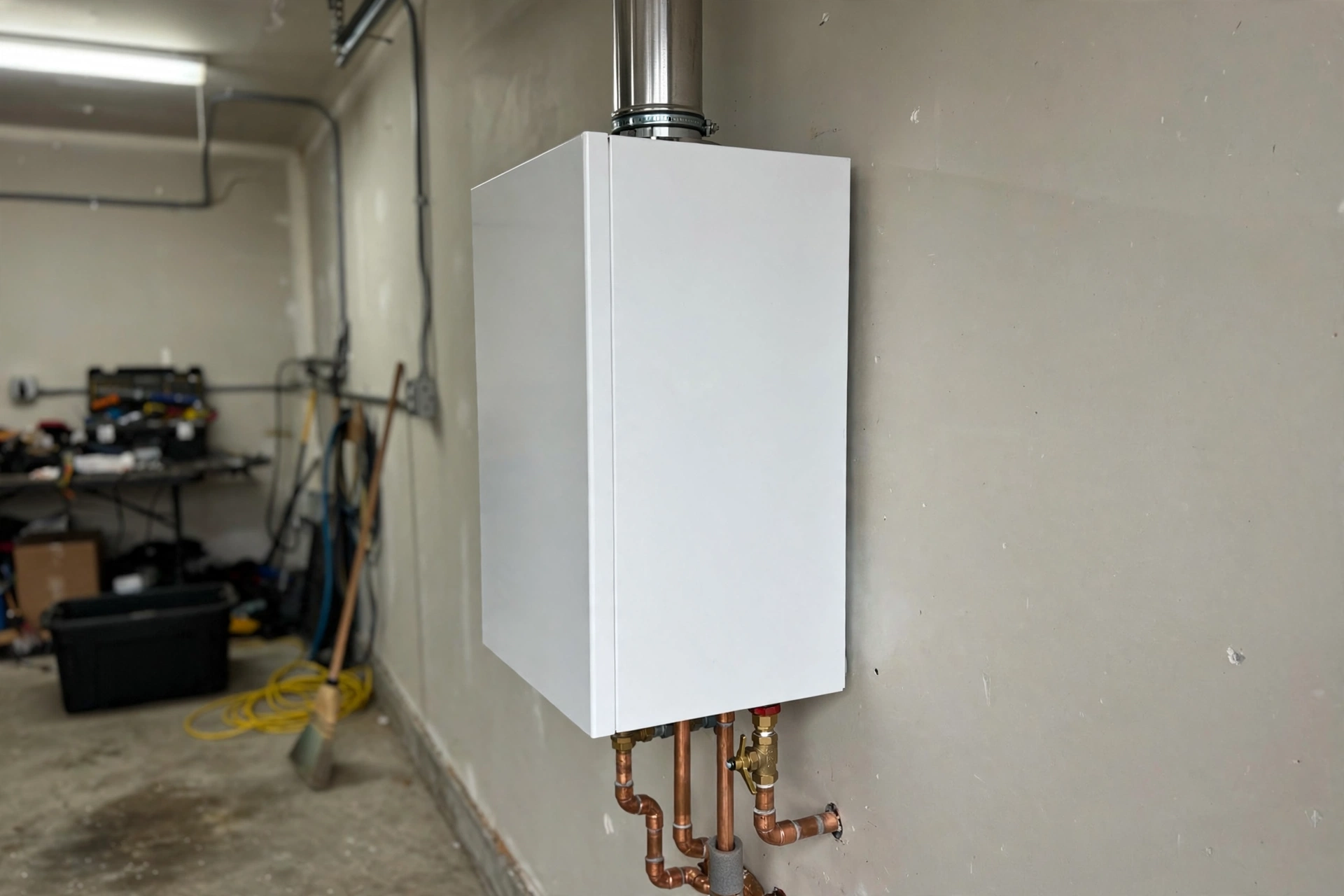
New installations can use a storage tank, a tankless unit, or a heat pump unit, and each fits a different kind of household. Storage tanks are straightforward, familiar, and well suited to homes with a ready garage spot and steady demand. Tankless units heat on demand, save floor space, and suit households that run showers back to back, though they need annual descaling in Peoria hard water. Heat pump units move heat rather than creating it directly, and their performance in a hot garage raises questions worth discussing with a contractor who knows Arizona installs.
The choice also depends on what the home already offers. Gas availability, venting paths, electrical capacity, and available floor or wall space all narrow the field. A home in Westbrook Village with an existing tank alcove may suit a straightforward tank install, while a Vistancia new build with a clean garage wall may suit a tankless mount. Homeowners curious about garage performance can read the post on heat pump water heaters in Arizona garages before requesting service, and contractors explain the tradeoffs for the specific home during planning.
Tell us what your unit is doing and request service.
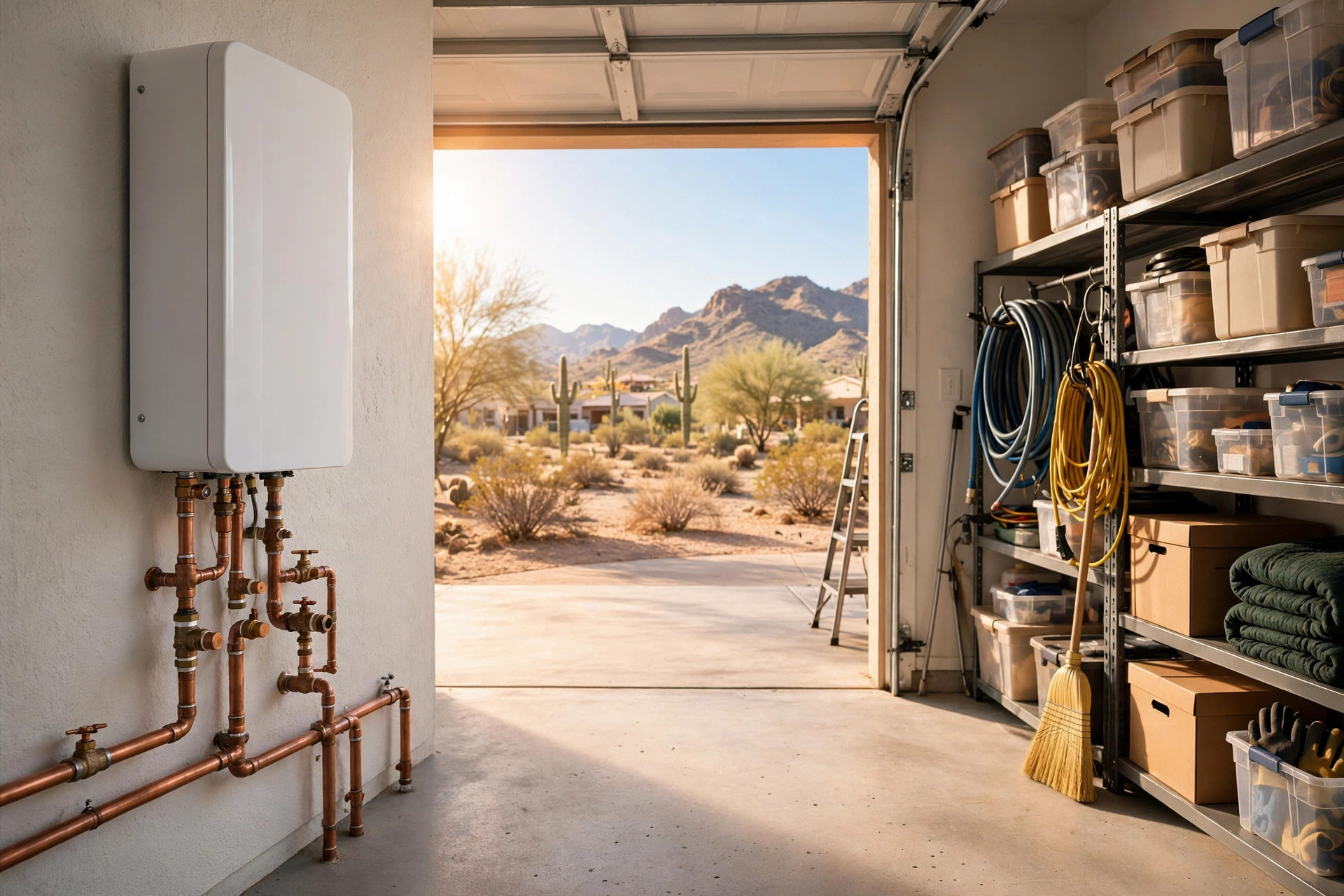
Arizona homes are slab-on-grade with no basements, so the garage is the usual home for a water heater, and placement there deserves real thought. The unit needs a level spot on the slab, clearance for service panels and anode rod removal, and room for a contractor to work without moving a car or a wall of storage. Venting must run cleanly to the outside, and the TPR discharge path must lead somewhere safe. A unit squeezed behind a water softener or boxed in by shelving may work on day one and frustrate every visit after.
Heat is part of the placement equation. Summer garage temperatures climb past 110 degrees, and that heat affects controls, connections, and vent materials over time. Contractors look for spots with reasonable airflow, protection from direct sun through open garage doors, and distance from stored chemicals or dusty corners. In homes near Sunrise Mountain where desert dust blows in with every monsoon gust, keeping the area around the unit clean and accessible pays off at every future visit.
Request service and get a straight answer about your unit.
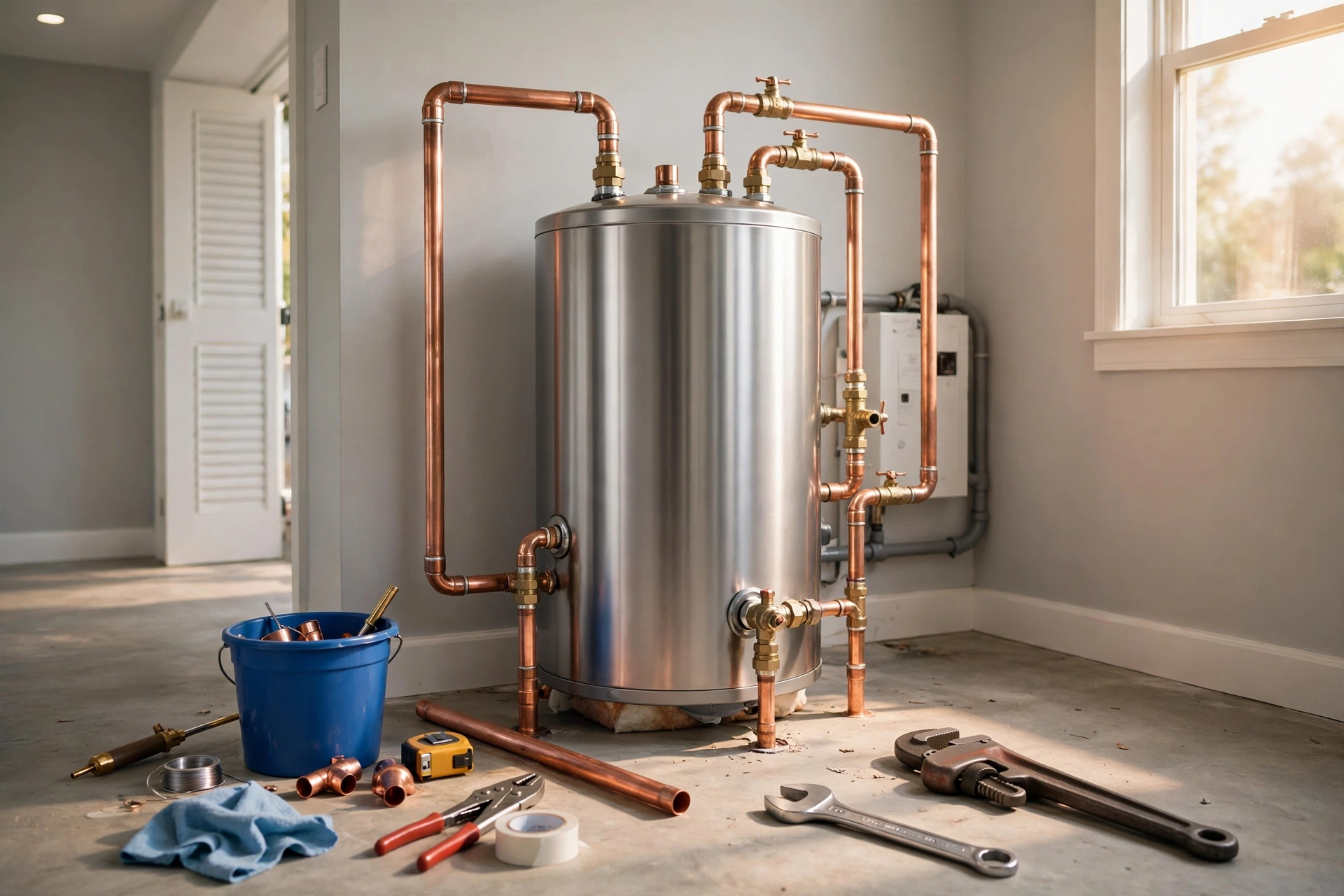
Install day work on water lines is methodical. The contractor confirms the main shutoff location, isolates the work area, and connects hot and cold lines with attention to unions, flex connectors, and dielectric fittings where dissimilar metals meet. A full port shutoff valve within easy reach matters more than homeowners realize, because the day a leak appears is the wrong day to discover the only shutoff sits behind stacked boxes. Clear labeling and reachable valves turn a future emergency into a manageable moment.
The expansion tank, check valves, and pressure conditions get attention during the same visit. Closed plumbing systems need room for heated water to expand, and an expansion tank in good condition protects the new heater from pressure strain. Contractors check existing valves for stiffness or corrosion and replace tired components while the system is open, rather than leaving a weak link attached to a brand new unit. Every connection is checked for drips under pressure before the install is considered finished.
Do not wait for a small fault to flood the garage. Request service now.
Startup is a sequence of confirmations, not a single switch flip. The contractor fills the tank or primes a tankless unit, bleeds air from lines, checks every joint for moisture, and confirms the burner ignites cleanly or the elements heat evenly. Water temperature is checked at a nearby tap, and the thermostat is set to 120 degrees, the commonly recommended setting. For gas units, venting is observed during a full heating cycle to confirm exhaust moves outside as intended.
The handover conversation matters as much as the technical checks. The contractor shows the homeowner the shutoff valves, explains the flushing or descaling rhythm for Peoria hard water, and notes what normal sounds and behavior look like for the new unit. Homeowners in Sun City and Sun City West often ask about care while traveling, and that conversation covers travel season steps alongside daily use. A homeowner who knows the shutoffs and the care rhythm starts with confidence instead of guesswork.
Request service and talk through sizing, fuel type, and placement.
New builds around Vistancia, Trilogy at Vistancia, and the corridors toward Lake Pleasant Regional Park bring their own installation patterns. Garages tend to be cleaner and more open, water lines run to planned locations, and households often include home offices, guest suites, and multiple bathrooms that raise peak demand. Contractors planning installs in these homes look at the full fixture count, including guest bathrooms that sit unused for weeks and then see heavy use when family visits. Sizing for the full house, not just the daily routine, prevents disappointment during those busy weekends.
New construction also means new plumbing that has not yet shown its habits. Pressure behavior, water quality quirks, and recirculation needs become clear only after the household settles in. A contractor who installs the unit and explains the first year care rhythm gives the household a strong start, and the post on water heaters in Vistancia new builds covers the patterns common to these newer neighborhoods. For homes with long pipe runs to distant bathrooms, the guide to recirculation pumps for large West Valley homes explains how wait times at far taps can be shortened.
Related: request an installation visit, replacement for aging units, gas unit repairs
Request service and describe what your water heater is doing.
Describe what your unit is doing and we will help arrange the next step.
Most units sit in the garage, since Arizona homes are slab-on-grade with no basements. The spot needs a level slab surface, service clearance, a clean vent path, and reachable shutoff valves. A contractor measures the real space and checks airflow and access before recommending a location.
Sizing follows household demand at peak hour: occupants, bathrooms, overlapping showers, laundry, and dishwasher use. Guest patterns matter too, especially in homes that host family during spring training or holidays. The contractor matches stored volume or flow capacity to that peak rather than to square footage alone.
Yes, from the first day. Valley water commonly measures 15 to 25 grains per gallon in hardness, so scale and sediment begin building immediately. The install plan includes a flushing or descaling rhythm, anode rod awareness for tanks, and shutoff access that makes future care straightforward.
Clear access to the install spot, the main water shutoff, and the path the contractor will use to bring the unit in. Move storage away from the wall where the heater will sit and note any existing leaks or valve trouble. The contractor handles connections, venting, filling, and startup checks on the day.
Yes, additions and remodels sometimes suit a second unit, especially when new bathrooms sit far from the existing heater. A contractor looks at pipe runs, demand, and available space before recommending a second unit versus a larger single unit or a recirculation setup. The layout of the home drives the answer.
The thermostat is commonly set to 120 degrees, which is the commonly recommended setting. The contractor checks temperature at a tap during startup and shows the homeowner how the control works. Households with specific needs can discuss temperature preferences during the handover conversation.
Not seeing your question? Request service and describe what your unit is doing.
Request ServiceTankless water heaters heat water only when a tap opens, which suits many Peoria homes where garage space is t...
Learn more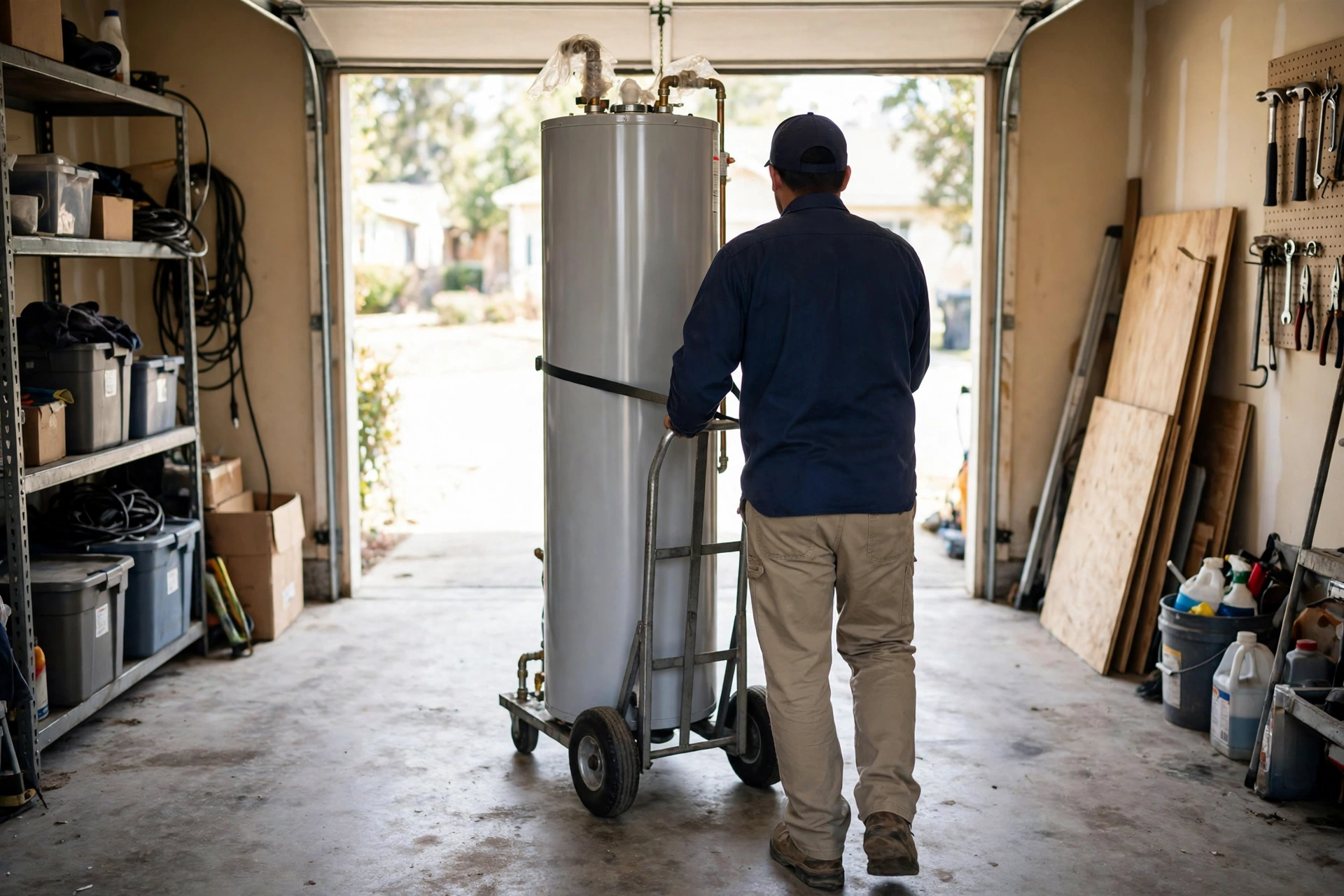
A water heater replacement becomes the right move when a tank leaks, rusts through, or stops heating reliably ...
Learn more
Gas water heaters in Peoria heat water with a burner under the tank, controlled by a thermostat and gas contro...
Learn more