New Build Water Heaters in Vistancia Homes
New homes in Vistancia usually arrive with a builder grade water heater sized for a typical household, not for...
Learn moreDel Webb opened Sun City on New Year's Day 1960, building the community out through 1978 in numbered phases. Homes from those years carry original building systems in places owners rarely see, including aging supply lines, older panels, and water heaters tucked into garages that have baked through decades of desert summers. It sits in a home where every system has aged together, and failure signs reflect that shared history.
This post reads the signs in the order owners usually notice them: water color first, then sound, then dampness, then shorter showers. Each section explains what the sign usually means, what else can mimic it, and when it points toward repair or replacement. Readers who want the broader 55 plus picture, including tank size and travel timing, can start with the post on water heaters in Sun City 55 plus communities. Here, the focus stays narrow: what an aging heater shows.
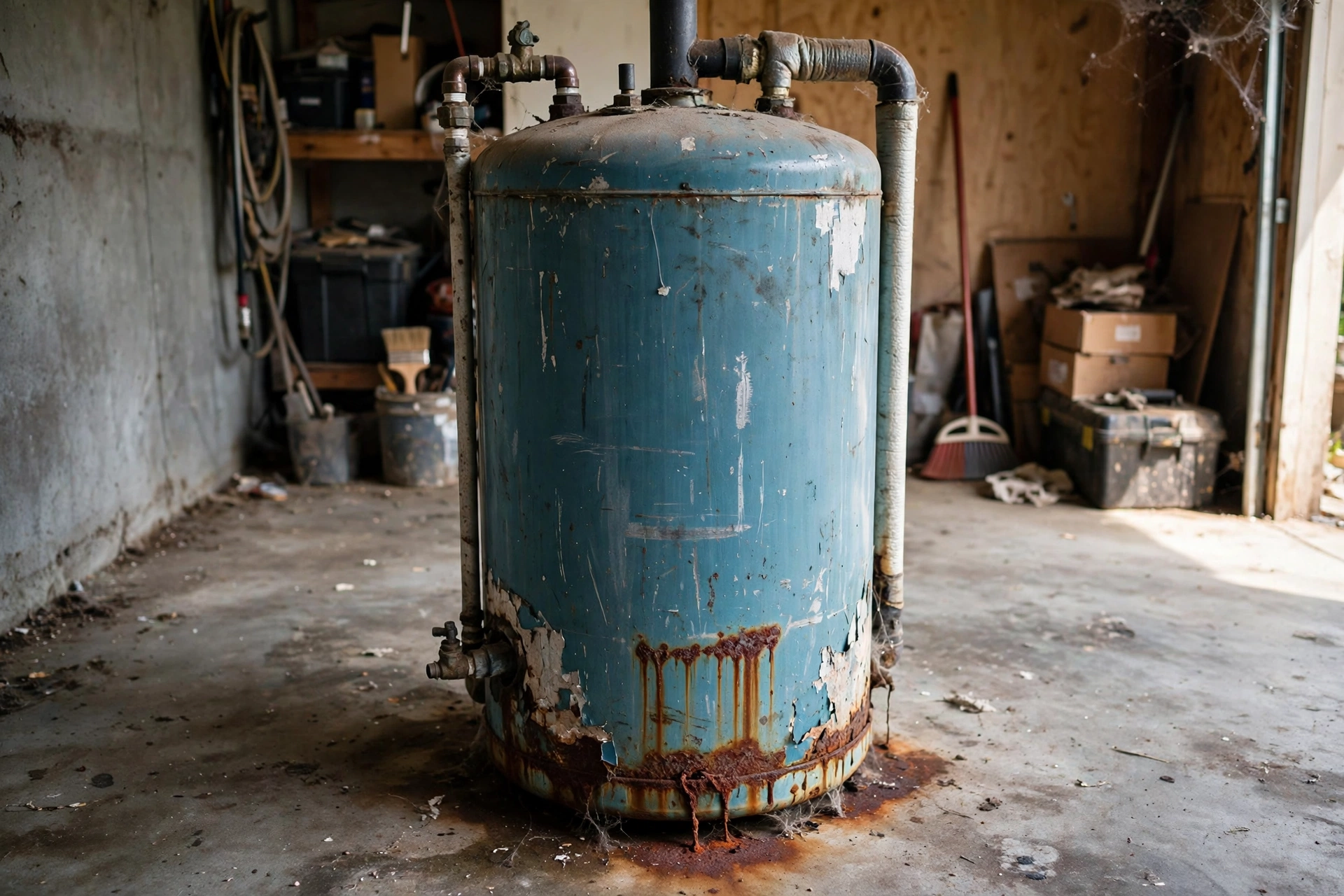
Rust colored water at a hot tap often means the tank interior or the anode rod has worn thin. When the rod depletes, steel tank walls corrode and shed rust into stored water, tinting the first hot draw of the day a brown or orange shade. Cold water that runs clear while hot water runs tinted points toward the tank, since cold water never sits inside the heater. A tint at both taps more often points toward aging supply pipes, including galvanized lines in many Sun City homes.
Persistent tint after flushing deserves attention. A single rusty draw after months away may reflect settled sediment stirring on restart, while tint that returns day after day suggests ongoing corrosion inside the tank. Metallic taste, grit in aerator screens, and a rust ring forming faster than usual around drains all strengthen the case for a closer look. A contractor can drain a sample, inspect the rod, and judge whether the tank walls still hold sound metal beneath the tint.
Describe the symptoms and request service anywhere in Peoria and the West Valley.
Popping and rumbling sounds start with sediment. Minerals settle on the tank floor, harden into a crust, and trap small pockets of water beneath the layer. When the burner or elements heat the tank, trapped water flashes to steam and escapes with a pop, while larger deposits rumble as they shift. New sounds in an older tank usually mean sediment has thickened past the point where a simple flush clears it easily.
Flushing helps most when sediment stays loose. Annual flushing in younger tanks removes deposits before they harden, while a flush in a neglected older tank may loosen only surface material and leave a stubborn base layer behind. Sounds that persist after a thorough flush, especially alongside slow recovery and rust tint, suggest the tank has moved past maintenance and toward replacement planning.
Tell us what your unit is doing and request service.
Dampness at the base deserves attention, even when the puddle looks small. Fittings, inlet and outlet connections, the relief valve discharge path, and tank seams each leak in different ways, and a slow seep can soak a slab and wick into drywall before anyone notices a puddle. Rust streaks running down the tank jacket, a damp ring on the garage floor, and a musty smell near the heater all point toward water escaping where it should stay sealed. A leaking water heater repair visit should come before the seep becomes a flood.
Leak location decides the response. A drip at a fitting, a valve, or a connection often yields to a repair, with new seals or a part swap restoring a dry base. A leak from a tank seam, a weld line, or the tank body itself signals corrosion through steel, and no seal or patch restores sound metal. A seam leak in a tank near the end of its expected span points firmly toward replacement, while the same drip in a younger tank still deserves inspection.
Request service and get a straight answer about your unit.
Short showers creep up gradually. A tank that once handled two showers back to back begins to fade during the second, then during the first, while recovery between draws stretches longer. Sediment narrowing useful capacity, a weakening element or burner, and a thermostat drifting from its setting can each shorten the hot supply. Sizing changes can mimic failure as well, when guests or a new routine add draws the tank never handled before.
A simple test helps. Note how many minutes of steady hot water the tank delivers before temperature dips, then note how long recovery takes before the next full shower feels hot again. A sharp drop in hot minutes, or a recovery stretch that doubles, points toward wear inside the tank rather than a change in routines. Steady water heater maintenance visits that track those patterns over time catch decline while planning still feels calm.
Do not wait for a small fault to flood the garage. Request service now.
Age frames every other sign. Arizona tank lifespans generally run 6 to 10 years, and a Sun City unit that has already passed that span with rust, noise, and leaks stacking together rarely rewards another repair. A tank that needed one element swap years ago differs sharply from a tank that needed repeated visits for leaks, noises, and temperature swings within a single year. When visits cluster and signs multiply, water heater replacement planning usually serves the household better than another temporary repair. A replacement visit should also review the expansion tank replacement needs, since thermal expansion handling ages alongside the heater.
Planned replacement beats emergency replacement in every way that matters. Owners can choose tank size around current routines, confirm garage clearance and drain routing, and schedule the work when the house stands occupied and follow up visits run easily. Keeping a simple log of install date, flush dates, rod checks, and past repairs gives any contractor a clear history at a glance. That log supports a confident decision.
Request service and talk through sizing, fuel type, and placement.
Read the guide, then describe your water heater problem and we will help arrange the next step.
Rust tint in hot water, new popping sounds, dampness at the base, and showers turning lukewarm sooner than before often appear first. Each sign alone may reflect a minor issue, but signs arriving together, especially in an older tank, point toward wear that deserves a contractor review.
Not always. Hot only tint usually points toward the tank or its rod, while tint at both hot and cold taps often points toward aging supply pipes. A single rusty draw after months away may reflect stirred sediment. Persistent tint after flushing, especially with age and noise, signals tank corrosion more firmly.
Sediment narrowing useful capacity, a weakening element or burner, a drifting thermostat, or added household demand can each shorten hot showers. Tracking hot minutes and recovery time over weeks separates wear from routine changes. A maintenance visit can test heating parts, check the thermostat, and flush sediment to restore performance where possible.
Replacement usually fits when age passes the expected span and signs multiply, such as rust, noise, leaks, and slow recovery arriving together. Repeated repair visits within a short span strengthen the case. A single fitting leak or a lone part failure in a younger tank often still suits repair.
Answers on rust, noise, leaks, short showers, and replacement timing for aging tanks.
Request ServiceNew homes in Vistancia usually arrive with a builder grade water heater sized for a typical household, not for...
Learn more
Sizing a water heater for a large household starts with peak hour demand, not with headcount alone. First hour...
Learn more
A water softener trades calcium and magnesium for sodium through ion exchange, which slows scale on fixtures a...
Learn more