Descaling a Tankless Heater in Peoria Hard Water
A tankless water heater heats water as it flows through a heat exchanger, and hard Peoria water leaves calcium...
Learn morePeoria homeowners travel often. Snowbirds leave for the summer, families head out for long weekends at Lake Pleasant Regional Park, and spring visitors fill homes near the Peoria Sports Complex while owners slip away. An empty house cannot report a drip, and a slow leak at a water heater fitting can soak a garage slab, drywall, and stored belongings before anyone returns. Smart detection fills that gap, watching the home around the clock and raising an alarm when water appears. Homes in El Mirage and across the West Valley face the same empty house risk during travel season.
Detection alone only warns. Detection paired with shutoff acts. A floor sensor that triggers a motorized valve can stop water at the main line within moments of sensing a leak, while a flow monitor can close the same valve when it sees continuous flow that matches no normal use. This post explains sensor types, shutoff options, and placement for leaking water heater repair prevention in traveling households, plus the power, internet, and routine checks that keep a system ready.
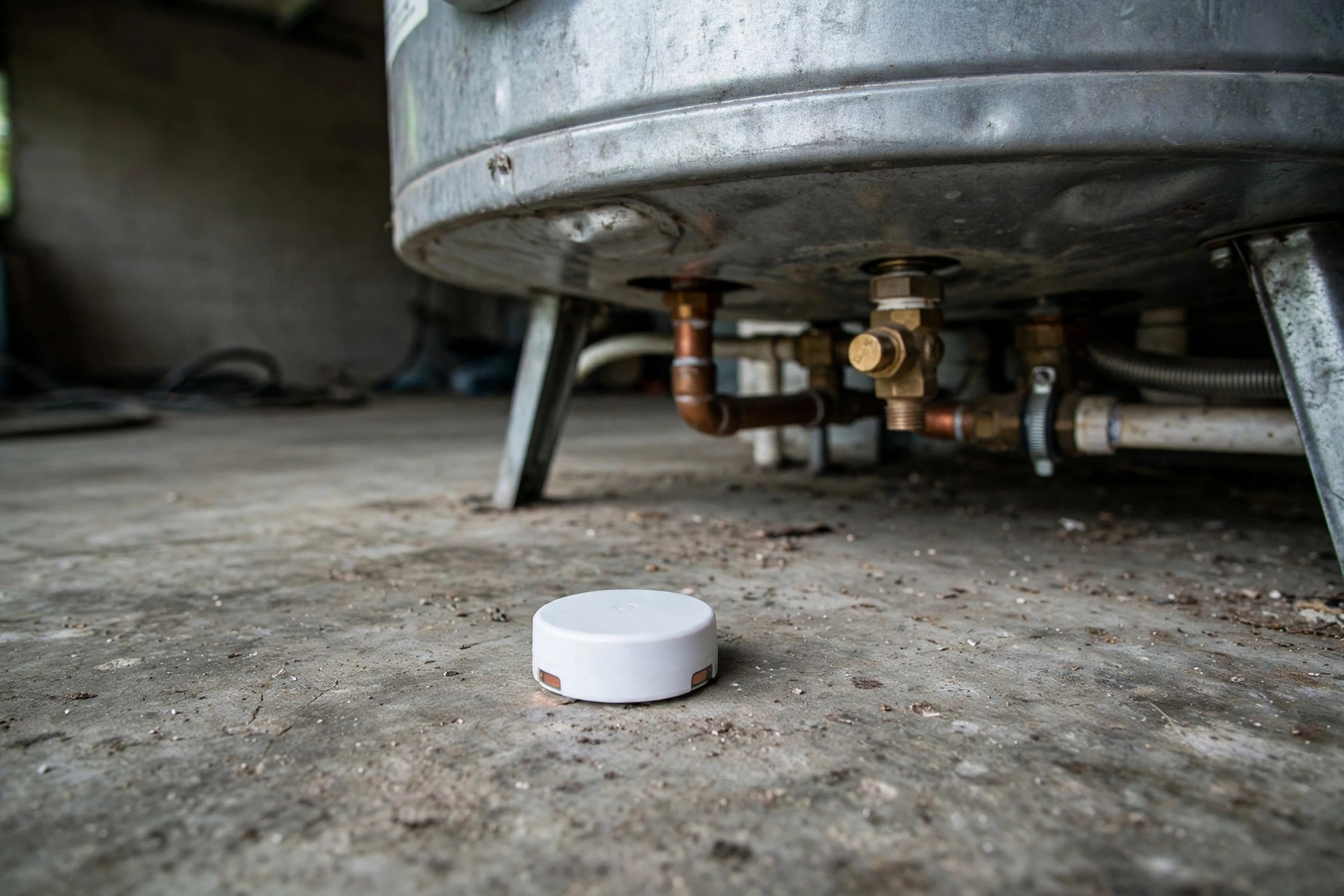
Floor sensors take the simplest form. Small puck or probe devices sit flat on the floor near risk points, watching for water pooling beneath them. Common spots include the water heater base, the washing machine, the dishwasher, kitchen and bathroom sinks, toilets, and refrigerator water lines. When water touches the sensor contacts, the device sounds an alarm and signals a valve or a phone alert.
Floor sensors excel at sudden drips and local floods, yet they miss what never reaches them. A pinhole leak inside a wall, a slab leak under the floor, or a slow drip inside a cabinet may run for days without wetting a sensor on open floor. Placement matters enormously. A sensor tucked behind the heater, where water would pool first, protects better than a sensor sitting in the middle of an open garage floor.
Describe the symptoms and request service anywhere in Peoria and the West Valley.
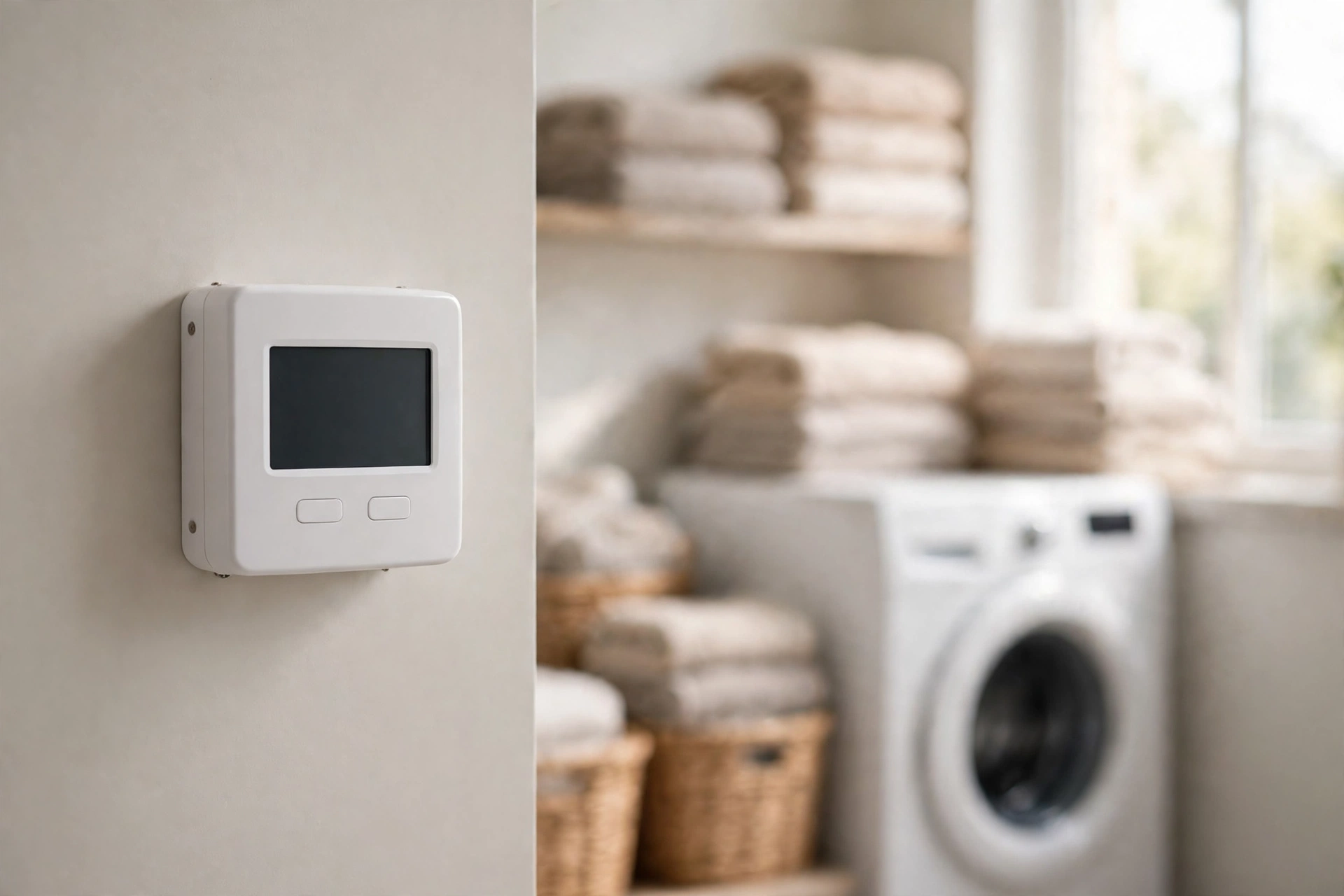
Flow monitors watch from a single point on the main water line, measuring flow continuously as water enters the home. By learning normal patterns, such as morning showers, laundry cycles, and irrigation draws, the system can flag continuous flow, slow seepage, or a sudden burst that breaks the pattern. That whole house view catches pinhole leaks, slab leaks, and running fixtures that floor sensors never see. The companion app often shows daily usage, pressure, and temperature.
Settings shape how a flow monitor responds. Some owners prefer an alert first, with a chance to shut water remotely from a phone, while others prefer automatic shutoff when flow crosses a set threshold for a set time. Vacation modes tighten those thresholds during travel, since an empty home should show little or no flow. The choice depends on household comfort with remote control, the reliability of home internet, and whether a neighbor can visit quickly if an alert arrives.
Tell us what your unit is doing and request service.
A shutoff valve turns detection into action. Most main line systems use a motorized ball valve, where a motor turns the ball a quarter turn to open or close the water path. When a sensor or flow monitor signals a leak, the motor closes the valve and stops water from feeding the leak. Many valves include a manual override, so a homeowner or neighbor can open or close the valve by hand during a power outage or a system fault. A separate valve operator style mounts over an existing shutoff handle and turns it mechanically, without cutting plumbing.
Email and push notifications can name the sensor location and confirm that the valve closed, giving a traveling owner a clear next step. Remote control through an app lets an owner close or reopen the main valve from anywhere with internet access, though reopening after a leak still needs a careful check before water flows again. Owners weighing a valve install can request service through the contact page to discuss placement, power, and shutoff settings with an independent local plumbing contractor.
Request service and get a straight answer about your unit.
Vacation modes tighten protection when the house empties. With no showers, laundry, or dishwashing expected, even a small continuous flow stands out as unusual. Many systems let owners set an away mode that lowers the flow threshold, shortens the time before shutoff, and sends alerts more urgently. Setting that mode before departure transforms a general monitor into a travel guard. The post on snowbird water heater shutdown for summer away pairs vacation settings for the heater with water supply steps for the whole home.
Routines shape false alarms as well. Irrigation cycles, pool fills, and a house sitter running laundry can look like unusual flow to a system tuned for an empty home. Reviewing alerts with those routines in mind, and telling a house sitter where the shutoff valve sits and how to reopen it, reduces confusion. Tuning thresholds to the real household keeps alerts meaningful.
Do not wait for a small fault to flood the garage. Request service now.
Power and internet set the limits of any smart system. Most main line monitors need standard AC power for the flow sensor and valve motor, so a power outage disables automatic shutoff unless the unit includes battery backup. WiFi carries alerts and remote control, so an internet outage silences notifications even when local shutoff still works on sensor signals. Owners should know which parts keep working offline and plan neighbor checks to cover gaps.
Placement checks keep the system honest over time. Sensors drift, get kicked aside, or end up buried under storage, and a sensor that no longer sits where water pools first offers little protection. Batteries weaken, sensors need testing, and flow monitors need occasional review to confirm thresholds still fit the household. Pairing sensor checks with steady water heater maintenance visits folds leak protection into a routine owners already keep.
Request service and talk through sizing, fuel type, and placement.
Read the guide, then describe your water heater problem and we will help arrange the next step.
Place sensors flat on the floor where water would pool first, including the water heater base, washing machine, dishwasher, sinks, toilets, and refrigerator water lines. Spread sensors across risk points rather than clustering them in one room. Check placement often, since sensors drift, get kicked aside, or end up buried under storage.
Yes, when paired with sensors or flow monitoring. A sensor signal or an unusual flow pattern triggers the motorized valve to close the main line, stopping water from feeding the leak. Phone alerts confirm the shutoff and the sensor location, so an owner can arrange a visit and a careful restart from afar.
Often, yes. Flow monitors watch the main line for continuous or unusual flow, catching pinhole leaks, slab leaks, and running fixtures that never wet a floor sensor. Floor sensors catch local floods at appliances. Together, the two views cover both visible pooling and hidden flow that never reaches open floor.
Most monitors need AC power, so an outage disables automatic shutoff unless the unit includes battery backup. Internet outages silence alerts and remote control even when local sensor shutoff still works. Knowing which parts work offline, plus a neighbor check plan, covers the gaps that power and internet outages create.
Answers on sensors, flow monitors, shutoff valves, and travel settings for empty homes.
Request ServiceA tankless water heater heats water as it flows through a heat exchanger, and hard Peoria water leaves calcium...
Learn more
New homes in Vistancia usually arrive with a builder grade water heater sized for a typical household, not for...
Learn more
Sizing a water heater for a large household starts with peak hour demand, not with headcount alone. First hour...
Learn more