Water Heaters in Sun City 55 Plus Communities
Water heaters in Sun City and Sun City West face a mix of older ranch floor plans, hard Valley water, and long...
Learn moreTankless water heaters appeal to Peoria homeowners who want endless hot water without a stored tank in the garage. New homes in Vistancia, remodels near Arrowhead Towne Center, and busy family homes off Loop 101 all turn to tankless units for steady showers and compact wall mounting. Hard water writes a different story inside the unit. With each heating cycle, minerals drop out of the water and cling to the heat exchanger, building a chalky crust that dulls heat transfer. A tankless water heater installation or repair plan that skips descaling invites trouble in Valley water.
Descaling is the maintenance job that keeps a tankless unit honest. A vinegar or citric acid flush, circulated through isolation valves with a small pump, dissolves scale and restores flow and heating performance. Skipping flushes lets scale thicken until efficiency drops, warning displays appear, and the unit shuts down under load. This post explains scale formation, flush signs, and timing for Avondale and Peoria tankless owners, plus the filter habits that stretch the interval between flushes.
Hard water carries dissolved calcium and magnesium that stay invisible until heat enters the picture. When water heats rapidly inside a tankless exchanger, minerals precipitate out of solution and bond to the hottest metal first. Layer by layer, a chalky crust builds on heat transfer surfaces, acting like insulation between the burner and the water. Even a thin film forces the burner to push heat through scale before it reaches water, lengthening heating time and raising energy use for the same shower.
Peoria sits in the hard end of the Valley picture, where hardness spans 15 to 25 grains per gallon across the Phoenix Valley. At that level, meaningful scale can accumulate in under a year, which is why manufacturers and contractors alike treat annual flushing as standard care in hard water areas. A softener slows the process by removing hardness minerals before they reach the unit, yet even softened water homes benefit from periodic flushing to clear sediment and keep internal parts clean.
Describe the symptoms and request service anywhere in Peoria and the West Valley.
A scaling exchanger rarely fails without warning. Hot water may fluctuate between hot and lukewarm during a shower, flow may weaken at taps that once ran strong, and the unit may take longer to deliver hot water than it did when new. Rumbling, crackling, or popping sounds during heating can signal scale shifting on hot metal. In advanced cases, the unit may shut down mid shower or show a warning display, protecting itself from overheating until scale clears.
Not every symptom means scale alone. A clogged inlet filter can mimic scale by starving flow, and a thermostat or sensor issue can mimic temperature swings. That overlap makes a full maintenance visit more useful than a flush alone. A contractor can check the filter, inspect the burner and venting, review the display history, and judge whether scale, a filter, or another fault explains the symptoms. Treating the right cause first prevents a flush from masking a deeper issue.
Tell us what your unit is doing and request service.
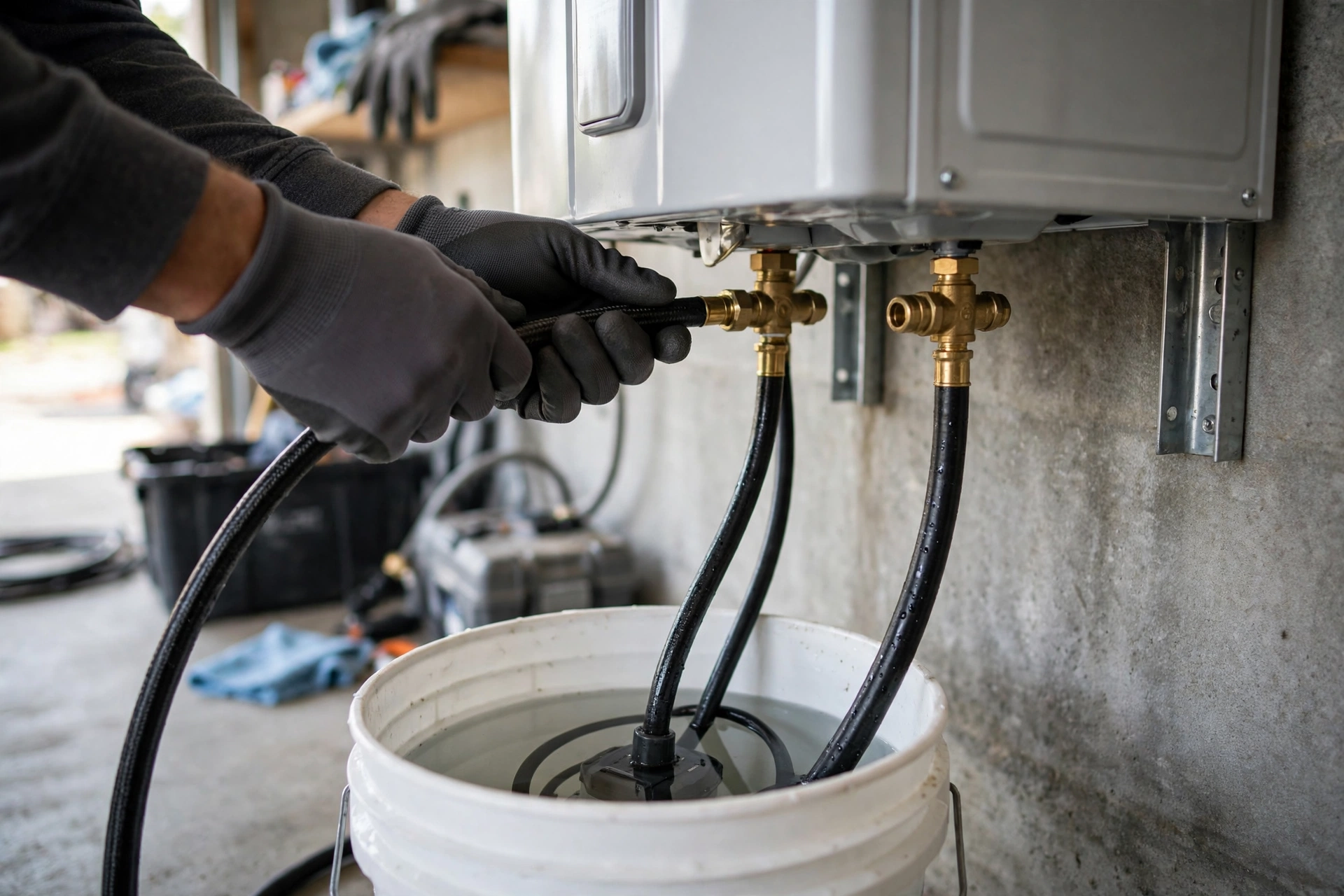
A standard descale uses isolation valves, a small circulation pump, hoses, and a bucket holding the cleaning solution. The pump circulates undiluted white vinegar or a food grade citric acid solution through the heat exchanger in a closed loop, dissolving calcium and magnesium deposits from hot surfaces. Vinegar circulation typically runs 45 to 60 minutes for routine maintenance, while a citric acid solution often works faster on heavier buildup. After circulation, clean water flushes the loop to rinse the solution and loosened scale from the unit.
Harsh acids have no place in this job. Muriatic acid and other aggressive acids can damage heat exchanger materials and should never enter a tankless flush. White vinegar suits routine yearly flushes, while a citric acid descaler made for tankless units clears heavier, long neglected buildup more completely. The unit stays isolated from the home water supply during the flush, with power and fuel shut down per the instructions for that model. A contractor handling the flush can also rinse the inlet filter and check fittings while the unit stands open.
Request service and get a straight answer about your unit.
Frequency follows hardness and softener use. Very hard water without a softener often needs a flush every 6 to 9 months, while annual flushing suits many homes as the standard rhythm. A whole home softener slows scale enough to stretch the interval, though periodic flushing still clears sediment and keeps internal parts clean. Homes that notice scale signs between flushes should shorten the interval rather than waiting for the calendar, since water use and hardness vary by household.
A hardness test or a water quality report gives owners a starting number, though household use shapes the real pace. Large households that run the unit heavily accumulate scale faster than a two resident home with the same water. Keeping a flush log with dates, solution used, and any signs noticed helps a contractor tune the interval over time. Steady water heater maintenance that pairs descaling with filter rinses keeps the unit steady, and the notes on how water softeners affect anode rods in Peoria explain the softener side of hard water care.
Do not wait for a small fault to flood the garage. Request service now.
The cold water inlet filter deserves attention between flushes. A small screen where cold water enters the unit catches sediment and debris before they reach the exchanger. Rinsing that screen every 6 months takes only a few minutes and prevents the low flow faults that shut the burner down. A filter caked with grit starves the unit even when the exchanger stays clean, so a quick rinse often restores flow that owners mistook for scale. The filter location and removal steps sit in the instructions for the unit.
Daily habits matter too. Keeping the thermostat at 120 degrees suits most households, and avoiding needless hot water draws limits the mineral load passing through the exchanger. When descaling no longer restores performance, or when the unit reaches the end of its expected span, water heater replacement deserves discussion. Tankless units last 15 to 20 years with annual descaling, and neglected scale shortens that span noticeably.
Request service and talk through sizing, fuel type, and placement.
Read the guide, then describe your water heater problem and we will help arrange the next step.
Annual descaling suits many Peoria homes as a standard rhythm, with flushes every 6 to 9 months for very hard water without a softener. A softener stretches the interval, though periodic flushing still helps. Signs between flushes, such as weaker flow or temperature swings, signal a shorter interval.
Undiluted white vinegar suits routine flushes, circulated through the exchanger for 45 to 60 minutes with a small pump. A food grade citric acid solution works faster on heavier buildup. Harsh acids, such as muriatic acid, should never be used, since they can damage heat exchanger materials.
Yes. Scale insulates the heat exchanger, forcing the burner to work harder and raising internal temperatures until the unit shuts down to protect itself. Warning displays, temperature swings, and weaker flow often appear first. Regular descaling and inlet filter rinses prevent most scale related shutdowns.
No, though it slows scale formation by removing hardness minerals before they reach the unit. Periodic flushing still clears sediment and keeps internal parts clean. Softener households can often stretch the descaling interval, with the exact rhythm set by hardness, water use, and signs between visits.
Answers on flush timing, cleaning solutions, warning signs, and softener effects for tankless units.
Request ServiceWater heaters in Sun City and Sun City West face a mix of older ranch floor plans, hard Valley water, and long...
Learn more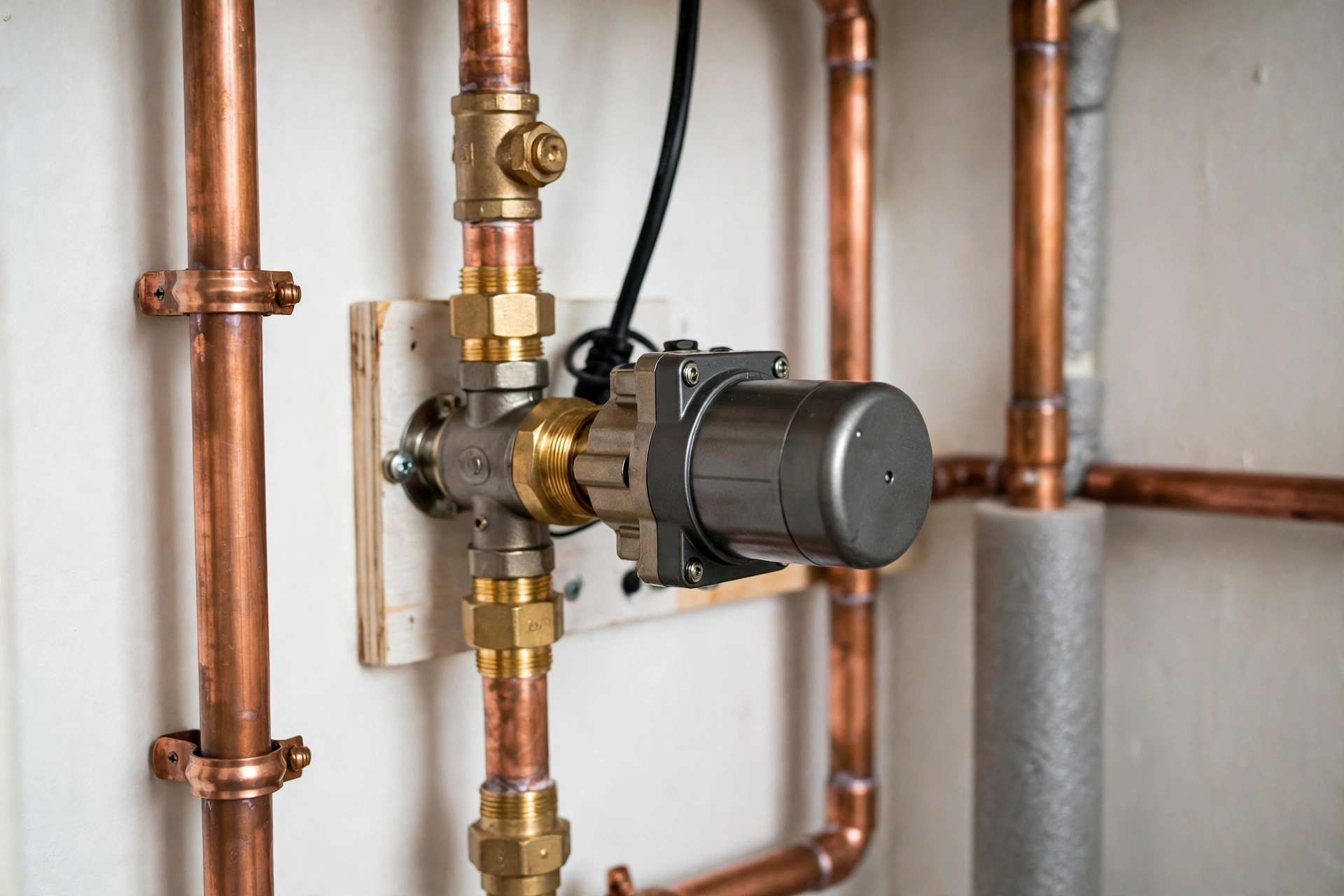
A recirculation pump keeps hot water moving through a loop so it waits near the tap instead of cooling in a lo...
Learn more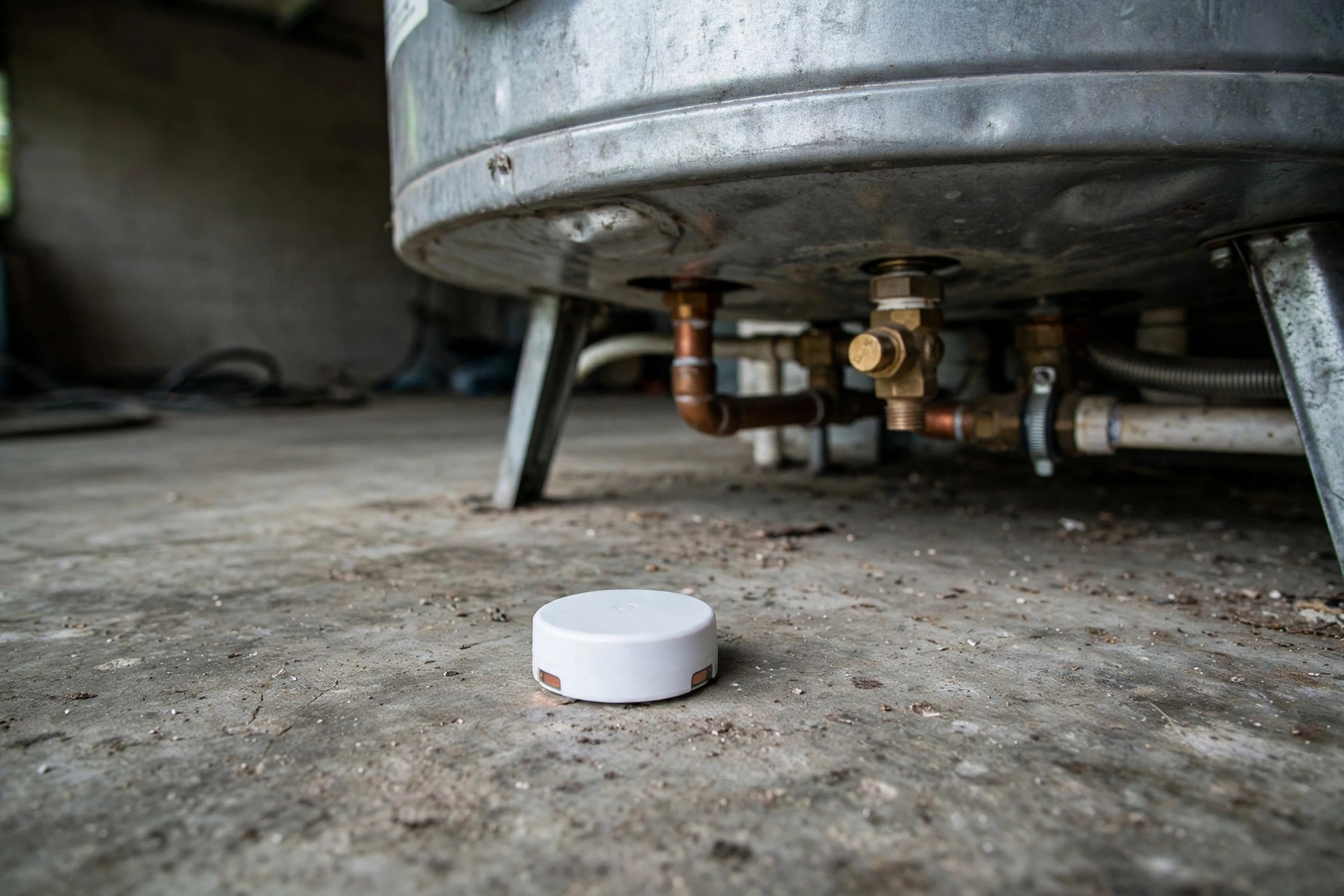
Smart leak detectors watch for water where it should not be, using floor sensors, flow monitoring, or both, an...
Learn more